Solid-state amps are a type of electronic amplifier that use semiconductor devices like transistors, diodes, and integrated circuits (ICs) to amplify an electrical signal. Unlike their tube amp counterparts, solid-state amps are more reliable, lightweight, and affordable. They are also less prone to overheating and require less maintenance.
If you’re a musician who plays an electric instrument like an electric guitar, bass, or keyboard, you’re going to need an amplifier so your audience can hear you. Solid-state amps are a popular choice for musicians because they offer a range of tonal options and are versatile enough to handle different music genres. They are also more affordable than tube amps, making them a great option for beginners and musicians on a budget.
In this article, we’ll take a closer look at what a solid-state amp is, how it works, and the pros and cons of using one. We’ll also explore the different types of solid-state amps available and how to choose the best one for your needs. Whether you’re a seasoned musician or just starting out, understanding the basics of solid-state amps can help you make an informed decision when it comes to selecting the right amplifier for your music.
Understanding Solid State Amps
Solid state amps use transistor technology to amplify the signal from an electric instrument. Unlike tube amps, which use vacuum tubes to amplify the signal, solid state amps use transistors to achieve the same result. Transistors are small electronic components that work as switches, allowing the current to flow through them when a voltage is applied. The amplification process in solid state amps happens entirely through the use of transistors.
Solid state amps have several advantages over tube amps. They are generally more reliable and require less maintenance. They are also lighter and more portable than tube amps, making them a popular choice among musicians who need to move their equipment frequently. Additionally, solid state amps are less expensive than tube amps, making them a great option for musicians on a budget.
One potential downside of solid state amps is that they can sometimes sound harsh or sterile compared to tube amps. This is because the amplification process in solid state amps is more linear and less responsive to changes in the input signal. However, many modern solid state amps use digital processing to simulate the sound of tube amps, allowing musicians to get the best of both worlds.
solid state amps are a popular choice for musicians who need a reliable, portable, and affordable amplifier. While they may not have the same warmth and character as tube amps, they offer a clean and consistent sound that can be tailored to suit a wide range of musical styles.
History of Solid State Amps
Solid-state amps have come a long way since their inception in the mid-20th century. The first practical solid-state electronic device, the transistor, was invented in 1947 by John Bardeen, Walter Brattain, and William Shockley at Bell Labs.
The transistor was a game-changer in the world of electronics, as it allowed for the amplification and switching of electronic signals without the need for bulky and unreliable vacuum tubes. This led to the development of the first solid-state amplifiers in the early 1950s.
Early solid-state amplifiers were not without their issues, however. They were plagued by reliability problems, and many musicians were skeptical of the new technology. It wasn’t until the late 1960s and 1970s that solid-state amps really began to gain traction in the music industry.
One of the first companies to successfully market solid-state amps to musicians was Peavey Electronics, founded by Hartley Peavey in 1965. Peavey’s early solid-state amps were praised for their reliability and affordability, and they quickly gained a following among musicians.
Today, solid-state amps are widely used in a variety of musical genres, from jazz to metal. While some purists still prefer the warm, natural sound of tube amps, solid-state technology has come a long way in the past few decades, and many modern solid-state amps are capable of producing high-quality, nuanced tones that rival those of their tube counterparts.
Components of Solid State Amps
Solid state amps are electronic devices that use semiconductor components to amplify sound signals. These components work together to create the sound that is produced by the amplifier. Some of the key components of solid state amps include:
Circuit Board
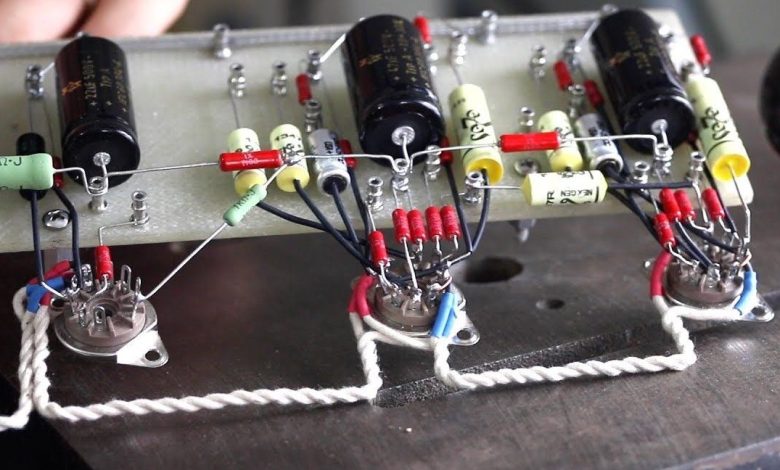
The circuit board is the backbone of the solid state amplifier. It provides a platform for all the other components to be mounted on. The circuit board is made of insulating material, such as fiberglass, and has conductive tracks etched onto it. These tracks connect the various components together and allow the electrical signals to flow through the amplifier.
Insulators
Insulators are used to protect the electrical components from short circuits. They are made of materials that do not conduct electricity, such as rubber or plastic. Insulators are used to cover the conductive tracks on the circuit board and to separate the various components from each other.
Capacitors
Capacitors are used to store electrical charge and release it when needed. They are used in solid state amps to filter out unwanted noise and to smooth out the output signal. Capacitors are made of two conductive plates separated by an insulating material, such as ceramic or plastic.
Resistors
Resistors are used to control the flow of electrical current in the amplifier. They are used to limit the amount of current that flows through the various components and to set the gain of the amplifier. Resistors are made of a material that resists the flow of electricity, such as carbon or metal.
Integrated Circuits
Integrated circuits, or ICs, are miniature electronic circuits that are built onto a single chip. They contain many components, such as transistors, resistors, and capacitors, and are used to perform specific functions in the amplifier. ICs are used in solid state amps to provide gain, to filter out noise, and to control the output signal.
Silicon
Silicon is the primary material used in the manufacture of solid state components. It is a semiconductor material that is used to make transistors, diodes, and other electronic components. Silicon is preferred because it is abundant, easy to work with, and has excellent electrical properties.
solid state amps are made up of various components that work together to amplify sound signals. These components include the circuit board, insulators, capacitors, resistors, integrated circuits, and silicon. Each component plays a crucial role in the functioning of the amplifier and contributes to the overall sound quality.
How Solid State Amps Work
Solid-state amplifiers use transistors to amplify the electrical signal from an instrument. The signal is first received by the preamp section, where it is amplified and equalized. The preamp section is responsible for shaping the sound of the instrument and adding gain to the signal.
The signal then goes through the power amp section, where it is further amplified to a level that can drive the speakers. The power amp section is responsible for providing the necessary current to drive the speakers and produce the desired volume.
Unlike tube amps, which use vacuum tubes to amplify the signal, solid-state amps use transistors. Transistors are semiconductor devices that can amplify and switch electronic signals. They are smaller, more reliable, and less expensive than vacuum tubes.
Solid-state amps are also more efficient than tube amps, as they consume less power and produce less heat. This makes them ideal for use in live performances and recording studios, where heat and power consumption can be a concern.
The gain control on a solid-state amp adjusts the amount of amplification applied to the signal. This allows musicians to adjust the level of distortion and overdrive in their sound. Solid-state amps can also be equipped with effects such as reverb, delay, and chorus, which can be added to the signal through the use of onboard digital signal processing.
solid-state amps are a reliable and efficient choice for musicians who require a consistent and versatile sound. They offer a range of features and effects, and can be used in a variety of settings, from small venues to large concert halls.
Types of Amplifiers
When it comes to amplifiers, there are several types available in the market. Each type has its own unique features and characteristics that make it suitable for different purposes. In this section, we will discuss some of the most common types of amplifiers.
Tube Amplifiers
Tube amplifiers, also known as valve amplifiers, use vacuum tubes to amplify the signal. These amplifiers are known for their warm and rich sound, which is often preferred by guitarists. Tube amps are also known for their natural compression, which can be used to create a smooth and creamy distortion. However, tube amps are often more expensive and require more maintenance than other types of amps.
Solid-State Amplifiers
Solid-state amplifiers, on the other hand, use transistors to amplify the signal. These amplifiers are known for their reliability and durability, as they have no moving parts. They are also less expensive than tube amps and require less maintenance. However, solid-state amps are often criticized for their harsh and sterile sound, which lacks the warmth and character of tube amps.
Hybrid Amplifiers
Hybrid amplifiers combine the best of both worlds by using both tubes and transistors in their design. These amps often have a tube preamp section, which adds warmth and character to the sound, and a solid-state power amp section, which provides reliability and durability. Hybrid amps are often less expensive than tube amps and offer a good compromise between the warmth of tubes and the reliability of solid-state.
Digital Amplifiers
Digital amplifiers use digital signal processing (DSP) to amplify the signal. These amps can emulate the sound of different types of amplifiers, including tube and solid-state amps. They are often more versatile than other types of amps and offer a wide range of effects and features. However, digital amps are often criticized for their artificial and synthetic sound, which lacks the warmth and character of tube amps.
each type of amplifier has its own unique features and characteristics that make it suitable for different purposes. When choosing an amplifier, it is important to consider your needs and preferences, as well as your budget and maintenance requirements.
Brands and Models
When it comes to solid state amps, there are several brands and models worth considering. Here are some of the most popular and highly-regarded options:
Fender
Fender is a well-known brand in the music industry, and they have several solid state amps that are worth checking out. One of their most popular models is the Fender Tone Master Deluxe Reverb, which offers a classic Fender sound with modern features like digital reverb and a lightweight design.
Roland
Roland is another brand that has a solid reputation in the music world. Their JC-120 amp is a classic solid state model that has been used by countless guitarists over the years. It offers a clean, clear tone that is perfect for jazz and other genres that require a pristine sound.
Marshall
Marshall is a brand that is often associated with tube amps, but they also have some excellent solid state options. The Marshall CODE100 is a versatile amp that offers a wide range of tones and effects, making it a great choice for players who want a lot of options.
Blackstar
Blackstar is a newer brand that has quickly gained a lot of fans in the guitar community. Their Silverline Stereo Deluxe amp is a powerful and versatile model that offers a range of tones and effects. It also has a sleek and modern design that looks great on stage.
Boss Katana
Boss is a brand that is known for their effects pedals, but they also have a line of solid state amps called the Katana series. These amps are designed to offer a range of classic tones, from clean to overdriven, and they also have built-in effects like delay and reverb.
Kemper Profiler
The Kemper Profiler is a bit different from the other amps on this list, as it is a digital modeling amp. However, it is worth mentioning because it has quickly become one of the most popular amps among professional guitarists. It allows players to create and save their own custom amp profiles, which can then be used to replicate the sound of any amp or effect.
Sound Quality of Solid State Amps
Solid state amps have come a long way in terms of sound quality. While they were once known for producing a harsh, sterile sound, modern solid state amps can now rival their tube counterparts in terms of warmth and tonal complexity.
One of the advantages of solid state amps is their ability to produce a clean tone. Unlike tube amps, which naturally produce harmonic distortion, solid state amps can produce a clean tone at any volume level. This makes them ideal for genres like jazz and country, where a clean, clear tone is essential.
However, solid state amps are not limited to just clean tones. Many modern solid state amps are capable of producing warm, rich tones with a complex harmonic structure. While they may not have the same “tube tone” as a classic Plexi or Marshall, they can still produce a wide range of tones that are suitable for a variety of genres.
One thing to keep in mind when comparing solid state amps to tube amps is that they have a different tonal character. While tube amps are known for their warm, organic sound, solid state amps are often described as more “clinical” or “precise”. This can be a matter of personal preference, but it’s worth considering when choosing between the two.
the sound quality of solid state amps has come a long way in recent years. While they may not have the same tonal character as a classic tube amp, they are capable of producing a wide range of tones with a high level of clarity and precision.
Applications of Solid State Amps
Solid state amplifiers have a wide range of applications in the music industry and beyond. They are commonly used in both professional and amateur settings due to their reliability and affordability. Here are some of the most common applications of solid state amps:
For Instruments
Solid state amps are widely used for various instruments, including electric guitars, keyboards, and bass guitars. They are known for their clean and crisp sound and are often preferred by musicians who play genres such as jazz, blues, and pop. Solid state amps are also popular among beginners and intermediate players due to their affordability and ease of use.
For Television and Computers
Solid state amps are also used in televisions and computers to amplify and enhance sound quality. They are known for their ability to produce clear and accurate sound, making them an ideal choice for home entertainment systems. Solid state amps are also used in professional audio and video production to ensure high-quality sound output.
For Radar
Solid state amps are also used in radar systems to amplify and transmit signals. They are known for their high efficiency and reliability, making them an essential component of radar systems used in air traffic control, weather monitoring, and military applications.
solid state amps have a wide range of applications in various industries, including music, television, computers, and radar systems. They are known for their reliability, affordability, and high-quality sound output, making them a popular choice among professionals and amateurs alike.
Advantages of Solid State Amps
Solid state amps have several advantages over their tube counterparts. In this section, we will discuss some of the most significant advantages of solid state amps.
Versatility
Solid state amps are incredibly versatile and can produce a wide range of tones. They are capable of producing both clean and distorted sounds, making them ideal for a variety of musical genres. Additionally, they often come with built-in effects such as reverb, delay, and chorus, allowing guitarists to experiment and create unique sounds.
Lightweight
Solid state amps are generally much lighter than tube amps. This makes them easier to transport and ideal for musicians who frequently travel or play gigs in different locations. They are also easier to carry around a studio or practice space, making them a popular choice for home recording setups.
Maintenance
Solid state amps require less maintenance than tube amps. They do not have any tubes that need to be replaced or biased, which can be time-consuming and expensive. Additionally, solid state amps do not generate as much heat as tube amps, which can lead to longer-lasting components.
Portability
Solid state amps are often more portable than tube amps. They are available in a variety of sizes, ranging from small practice amps to larger gigging amps. Many solid state amps also come with built-in handles, making them easy to carry around.
Durability
Solid state amps are generally more durable than their tube counterparts. They are less susceptible to damage from bumps and vibrations, making them ideal for musicians who frequently travel or play gigs. Additionally, they are less likely to break down or require repairs, which can save musicians time and money in the long run.
solid state amps offer several advantages over tube amps. They are versatile, lightweight, require less maintenance, are more portable, and are more durable. These factors make them an excellent choice for musicians of all levels and genres.
Considerations for Musicians
When considering whether to use a solid-state amp, there are a few important factors to keep in mind.
Clean Headroom
One of the advantages of solid-state amps is their ability to provide clean headroom. This means that the amp can maintain a clean and undistorted sound even at high volumes. This is particularly important for musicians who play in genres that require a clean tone, such as jazz or country.
Overdrive
While solid-state amps are known for their clean sound, they can also provide overdrive. However, the overdrive on a solid-state amp is often different from that of a tube amp. Solid-state amps tend to have a more compressed and less dynamic overdrive, which may not be suitable for all genres.
Presets
Many solid-state amps come with built-in presets that can be useful for musicians who need a variety of tones. However, it’s important to note that these presets may not always be suitable for all genres or playing styles.
Attenuation
Solid-state amps often come with built-in attenuation, which allows the musician to lower the volume of the amp without sacrificing tone. This can be useful for gigging musicians who need to play at lower volumes in certain venues.
Delay
Some solid-state amps come with built-in delay, which can be useful for musicians who need to add a sense of space or depth to their sound. However, it’s important to note that the quality of the delay on a solid-state amp may not always be as good as that of a dedicated delay pedal.
Warm Up
Unlike tube amps, solid-state amps do not require a warm-up period before use. This can be convenient for musicians who need to set up quickly and start playing immediately.
solid-state amps can be a great choice for musicians who need a reliable and consistent sound. However, it’s important to consider the specific needs of your playing style and genre before making a decision.
Conclusion
solid-state amps are a popular choice among guitar players due to their reliability, affordability, and versatility. While tube amps are known for their warm and organic tones, solid-state amps offer a more consistent and clean sound that can be suitable for a wide range of musical genres.
One of the main advantages of solid-state amps is their durability. Unlike tube amps that require regular maintenance and replacement of tubes, solid-state amps are more reliable and require less upkeep. Additionally, solid-state amps are less prone to overheating and can handle high volumes without distorting the sound.
Another benefit of solid-state amps is their affordability. While tube amps can cost thousands of dollars, solid-state amps are much more budget-friendly and can be a great option for beginner and intermediate players. Furthermore, solid-state amps often come with a variety of built-in effects and features that allow players to experiment with different sounds and tones.
while solid-state amps may not have the same warm and organic tones as tube amps, they offer a reliable, affordable, and versatile option for guitar players of all levels. Whether you’re playing rock, jazz, or blues, a solid-state amp can provide you with the clean and consistent sound you need to take your music to the next level.