

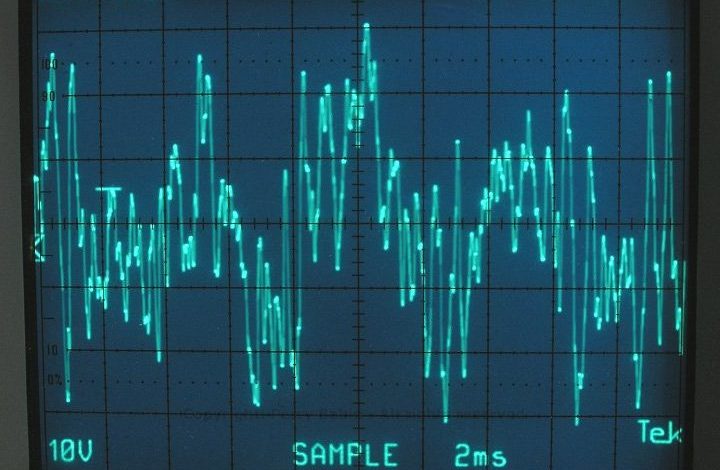
Audio signals are an essential part of our daily lives. From the music we listen to on our phones to the sounds we hear on TV, audio signals are all around us. But what exactly is an audio signal?
In simple terms, an audio signal is an electrical representation of sound. It can be analog or digital and is typically measured in decibels. Analog signals are continuous, meaning they are represented by a changing level of electrical voltage. On the other hand, digital signals are represented by a series of binary numbers. Audio signals have frequencies in the audio frequency range of roughly 20 to 20,000 Hz, which corresponds to the lower and upper limits of human hearing.
Understanding audio signals is crucial for anyone who works with sound, from musicians to sound engineers. In the following article, we will delve deeper into what audio signals are, how they work, and their importance in the world of audio. We will also explore the different types of audio signals, their properties, and how they are processed. So, let’s get started!
Understanding Audio Signals
Audio signals are the electrical representations of sound waves that are used to transmit and process sound information. These signals are created by sound sources, such as microphones or instruments, and then processed by audio equipment, such as mixers, amplifiers, and speakers.
There are four main types of audio signals: microphone level, instrument level, line level, and speaker level. Microphone level signals are very weak and require a preamplifier to bring them up to line level. Instrument level signals are stronger than microphone level signals but still require some amplification. Line level signals are the most common type of audio signal and are used to connect audio equipment together. Speaker level signals are the strongest type of audio signal and are used to drive speakers directly.
It is important to understand the differences between these types of audio signals in order to properly connect and use audio equipment. For example, connecting a microphone level signal directly to a speaker could damage the speaker and produce poor quality sound. It is also important to match the impedance of the audio equipment to ensure proper signal flow and avoid signal loss.
In addition to understanding the different types of audio signals, it is also important to understand the frequency range of audio signals. Audio signals range from 20 Hz to 20 kHz, with different frequencies corresponding to different pitches of sound. Low frequencies are associated with bass sounds, while high frequencies are associated with treble sounds.
understanding audio signals is essential for anyone working with audio equipment. By understanding the different types of signals and their frequency ranges, you can ensure that your audio equipment is properly connected and producing high-quality sound.
Types of Audio Signals
There are two main types of audio signals: analog and digital. Here is an overview of each type.
Analog Signals
Analog signals are continuous electrical signals that vary in frequency and amplitude. These signals are used to represent sound waves in the air. Analog signals are the original form of audio signal and were used in the first audio recording and playback devices.
Analog signals are often described as warm and natural sounding. This is because they capture the full range of frequencies and harmonics present in the original sound wave. However, analog signals are susceptible to noise and distortion, which can degrade the quality of the audio.
Analog signals are commonly used in older audio equipment such as turntables, cassette players, and tube amplifiers. They are also used in some modern equipment, such as analog synthesizers and guitar amplifiers.
Digital Signals
Digital signals are discrete electrical signals that represent sound waves as a series of numbers. These signals are created by sampling the analog signal at regular intervals and converting each sample into a digital value. Digital signals are used in most modern audio recording and playback devices.
Digital signals are often described as clean and precise sounding. This is because they are less susceptible to noise and distortion than analog signals. Digital signals can also be manipulated and processed more easily than analog signals.
Digital signals are commonly used in digital audio workstations, CD players, and streaming services. They are also used in some modern synthesizers and effects processors.
both analog and digital signals have their own unique characteristics and uses in audio. The choice between analog and digital signals often depends on personal preference and the specific application.
Characteristics of Audio Signals
Audio signals are electronic representations of sound waves. They can be characterized by parameters such as their frequency, amplitude, and phase. Understanding these characteristics is important in audio signal processing and analysis.
Frequency
The frequency of an audio signal refers to the number of cycles per second of the sound wave. It is measured in Hertz (Hz). The human ear can typically hear frequencies ranging from 20 Hz to 20,000 Hz. Audio signals with frequencies below 20 Hz are called infrasound, while those above 20,000 Hz are called ultrasound.
Different audio signals have different frequency ranges. For example, a bass guitar produces low-frequency signals, while a flute produces high-frequency signals. Understanding the frequency range of an audio signal is important in audio mixing and mastering.
Amplitude
The amplitude of an audio signal refers to the strength or loudness of the sound wave. It is measured in decibels (dB). The greater the amplitude, the louder the sound.
Audio signals with low amplitudes are quieter and may be difficult to hear, while those with high amplitudes can be too loud and cause distortion. Understanding the amplitude of an audio signal is important in audio recording, as it can affect the quality of the recording.
Phase
The phase of an audio signal refers to the position of the sound wave in its cycle. It is measured in degrees.
Audio signals with different phases can interact with each other in different ways. For example, two audio signals with the same phase can reinforce each other and produce a louder sound, while two signals with opposite phases can cancel each other out and produce silence. Understanding the phase of an audio signal is important in audio mixing and effects processing.
the frequency, amplitude, and phase are important characteristics of audio signals. Understanding these characteristics can help in audio processing, analysis, and recording.
Processing of Audio Signals
Audio signals are electronic representations of sound waves, which can be manipulated in various ways to enhance or modify the quality of the sound. The process of manipulating audio signals is known as audio signal processing. In this section, we will explore some of the common methods of audio signal processing.
Amplification
Amplification is the process of increasing the amplitude of an audio signal. This is typically done to make the sound louder, but it can also be used to boost certain frequencies or to compensate for losses in signal strength. Amplification can be achieved using analog or digital circuits. Analog amplifiers use electrical components such as transistors and vacuum tubes to amplify the signal, while digital amplifiers use algorithms to boost the signal.
Filtering
Filtering is the process of removing or attenuating certain frequencies from an audio signal. This can be done to remove unwanted noise or to emphasize certain parts of the sound. There are several types of filters that can be used for audio signal processing, including low-pass, high-pass, band-pass, and notch filters. A low-pass filter, for example, allows low-frequency signals to pass through while attenuating high-frequency signals.
Modulation
Modulation is the process of changing the characteristics of an audio signal by superimposing it onto another signal. This can be used to add effects to the sound, such as reverb or chorus, or to transmit the signal over long distances. There are several types of modulation that can be used for audio signal processing, including amplitude modulation (AM), frequency modulation (FM), and phase modulation (PM).
audio signal processing is an important aspect of modern audio technology. By amplifying, filtering, and modulating audio signals, we can enhance the quality of the sound and create unique effects. Whether you are a musician, sound engineer, or audiophile, understanding audio signal processing is essential for achieving high-quality sound.
Applications of Audio Signals
Audio signals are used in a variety of applications, from telecommunications to healthcare. In this section, we will discuss some of the most common applications of audio signals.
Telecommunication
Audio signals play a crucial role in telecommunication systems. They are used to transmit voice and other audio information over long distances. In telephony, audio signals are converted into electrical signals and transmitted over wires or wireless networks. In addition to traditional telephony, audio signals are also used in video conferencing, online gaming, and other forms of real-time communication.
Music Production
Audio signals are also widely used in the music industry. They are used to record, mix, and master music tracks. Audio signals can be captured using microphones and other recording equipment, and then processed using various effects and filters. In addition to music production, audio signals are also used in live performances, where they are amplified and projected through speakers.
Healthcare
Audio signals are used in a variety of healthcare applications. For example, they are used to monitor heartbeats, breathing patterns, and other vital signs. Audio signals are also used in medical imaging, where they are used to create images of internal organs and tissues. In addition, audio signals are used in assistive technologies, such as hearing aids, which amplify and process audio signals to help people with hearing impairments.
audio signals are an essential part of modern technology, and they are used in a wide range of applications. From telecommunication to healthcare, audio signals play a crucial role in transmitting and processing information.
Conclusion
audio signals are representations of sound that are typically transmitted as either analog or digital signals. Analog signals use a changing level of electrical voltage to represent sound, while digital signals use a series of binary numbers. Audio signals can have frequencies in the audio frequency range of roughly 20 to 20,000 Hz, which corresponds to the lower and upper limits of human hearing.
Understanding audio signals is crucial for anyone working in audio electronics, sound processing, and related fields. By converting sound signals into electrical signals, processing these electrical signals, and converting them back into sound, audio electronics play a critical role in many different applications, from music production to speech recognition.
In recent years, the rise of artificial intelligence and big data has allowed us to uncover audio’s hidden secrets, providing previously inaccessible insights for business and end-users. As we continue to develop new technologies and techniques for working with audio signals, it is clear that this field will continue to be a fascinating and dynamic area of study.


