

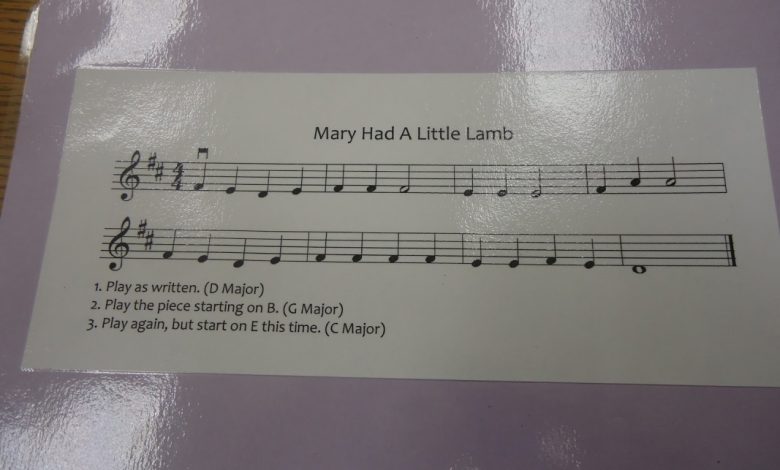
Transposing a melody from one key to another is a fundamental skill that every musician should have in their arsenal. It allows you to play a song in a key that suits your vocal range or the range of your instrument. Transposing a melody can also help you to create new arrangements of a song, giving it a fresh sound.
The process of transposing a melody involves changing the pitch of each note in the melody while maintaining the same intervals between the notes. This means that the melody will sound the same, but it will be in a different key. There are several methods for transposing a melody, including using a music transposition calculator, manually transposing the notes, or using software to do the job for you. Each method has its advantages and disadvantages, and the choice of method will depend on your level of experience and the complexity of the melody.
Understanding Melody
Melody is the most recognizable part of a song. It is the series of single notes that make up the main theme of a piece of music and is usually played by the lead instrument or sung by the vocalist. Melody is the part of the music that people hum, whistle, and remember long after the song has ended.
In Western music, melody is typically made up of a series of notes that are played or sung one after another. These notes are organized into phrases, which are like musical sentences, and these phrases are often repeated with slight variations throughout the song.
Melodies can be simple or complex, and they can be written in any key. When transposing a melody, it is important to understand the relationship between the notes in the original key and the notes in the new key. This will help you to maintain the integrity of the melody while still changing its key.
Understanding melody is essential to transposing music successfully. By breaking down the melody into its component parts and understanding how those parts relate to each other, you can more easily transpose the melody to a new key without losing its essence.
Basics of Transposition
Transposition is the process of changing the key of a piece of music. It is a vital skill for any musician who wants to play or sing in different keys. Here are a few basics to keep in mind when transposing a melody:
-
Understand key signatures: Before you can transpose a melody, you need to understand key signatures. Key signatures tell you which notes are sharp or flat in a particular key. For example, the key of C has no sharps or flats, while the key of G has one sharp (F#). Understanding key signatures will help you determine which notes need to be changed when transposing a melody.
-
Know the interval between keys: When you transpose a melody, you are essentially moving it up or down a certain number of steps on the musical scale. The distance between two keys is measured in intervals. For example, the interval between C and G is a perfect fifth, while the interval between C and F is a perfect fourth. Knowing the interval between two keys will help you determine how many steps to move the melody when transposing.
-
Use a transposition chart: A transposition chart is a useful tool for quickly transposing a melody from one key to another. The chart shows the notes in each key and how they relate to each other. For example, if you want to transpose a melody from C to F, you can use the transposition chart to see that the note C in the key of C corresponds to the note F in the key of F. Using a transposition chart can save you time and help you avoid mistakes when transposing a melody.
-
Practice transposing melodies: Like any skill, transposition takes practice. Start by transposing simple melodies from one key to another. As you become more comfortable with the process, you can move on to more complex melodies. With practice, you will be able to transpose melodies quickly and accurately.
Remember, transposition is a skill that takes time and practice to master. By understanding key signatures, knowing the interval between keys, using a transposition chart, and practicing regularly, you can become proficient at transposing melodies in no time.
Step-by-Step Guide to Transpose Melody
Identifying the Key
The first step in transposing a melody is to identify the key of the original melody. This can be done by looking at the key signature of the sheet music or by listening to the melody and identifying the tonic note. Once you have identified the key, you can move on to selecting the new key.
Selecting the New Key
When selecting the new key, it’s important to consider the range of the melody and the instruments or voices that will be playing or singing it. You want to choose a key that is comfortable for the performers and fits within their range. To do this, you can use a transposition chart or calculator to determine the new key.
Applying Transposition
Once you have identified the original key and selected the new key, you can begin the process of transposition. To transpose a melody, you need to move each note up or down by the same interval. For example, if you are transposing from C to G, you would move each note up by a perfect fifth. You can use a transposition chart or calculator to determine the interval for the new key.
To apply the transposition, you can either write out the new melody on a clean sheet of paper or use music notation software to transpose the melody automatically. If you are writing out the new melody by hand, it can be helpful to use a table to keep track of each note and its new position in the transposed melody.
By following these simple steps, you can successfully transpose a melody from one key to another. Remember to choose a new key that fits the range of the performers and to use a transposition chart or calculator to determine the interval for the new key. With a little practice, you’ll be able to transpose melodies with ease!
Common Challenges in Transposing Melody
Transposing a melody from one key to another can be challenging, even for experienced musicians. Here are some common challenges you may encounter when transposing a melody:
1. Range
One of the most common challenges when transposing a melody is dealing with the range. If you transpose a melody up or down too much, the melody may become too high or too low for the singer or instrument playing it. This can make the melody difficult to sing or play, and may even damage the voice or instrument.
2. Chords
Another challenge when transposing a melody is dealing with the chords. When you transpose a melody to a new key, you also need to change the chords to match the new key. This can be tricky, especially if the original chords were complex or included unusual chord progressions.
3. Accidentals
Accidentals are notes that are not part of the key signature. When you transpose a melody to a new key, you need to make sure that any accidentals are also transposed correctly. This can be challenging, especially if the melody includes a lot of accidentals.
4. Instrumentation
If you are transposing a melody for a different instrument, you may encounter challenges with the instrumentation. Different instruments have different ranges and capabilities, and some melodies may not translate well to certain instruments. For example, a melody that sounds great on a piano may not work as well on a guitar.
5. Style
Finally, the style of the melody can also be a challenge when transposing. Some styles of music, such as jazz or blues, rely heavily on specific chord progressions and melodic patterns. Transposing these melodies can be difficult, as it may require changing the entire feel and style of the music.
transposing a melody can be a challenging but rewarding process. By being aware of these common challenges, you can better prepare yourself for the task and create a successful transposition.
Tips and Tricks for Easy Transposition
Transposing a melody can seem like a daunting task, but with a few tips and tricks, it can become a simple and easy process. Here are some things to keep in mind when transposing a melody:
-
Know your keys: Understanding the relationship between different keys is crucial when transposing a melody. Familiarize yourself with the circle of fifths and learn the key signatures for each major and minor key.
-
Use a table: One helpful tool for transposing a melody is a table that shows the corresponding notes in different keys. You can create your own table or use a pre-made one, like the one found on MusicRadar.
-
Transpose by intervals: Instead of trying to figure out each individual note in the melody, try transposing it by intervals. For example, if you’re transposing a melody from C major to G major, you would move each note up a perfect fifth.
-
Practice with simple melodies: If you’re new to transposing, start with simple melodies before moving on to more complex ones. Nursery rhymes and folk songs are great examples of simple melodies that can be easily transposed.
-
Experiment with different keys: Don’t be afraid to experiment with different keys when transposing a melody. Sometimes a melody can sound even better in a different key than the original.
By following these tips and tricks, transposing a melody can become a quick and painless process.
Applications of Transposing Melody
Transposing melody is a useful technique that can be applied in a variety of situations. Here are some of the most common applications of transposing melody:
-
Adapting to a Singer’s Range: One common use of transposing melody is to adapt a song to a singer’s vocal range. For example, if a song is originally written in a key that is too high for a particular singer, the melody can be transposed to a lower key that is more comfortable for the singer to sing.
-
Playing with Other Instruments: Another use of transposing melody is to allow a melody to be played with other instruments that are in a different key. For example, if a melody is written for a piano in the key of C, it can be transposed to the key of G so that it can be played with a guitar.
-
Creating Variations: Transposing melody can also be used to create variations of a melody. By transposing a melody to a different key, it can take on a new character and sound, which can be used to create a new version of the original melody.
-
Teaching Music Theory: Transposing melody is also a useful tool for teaching music theory. By transposing a melody to different keys, students can learn about the relationships between different keys and how melodies can be adapted to fit different musical contexts.
transposing melody is a versatile technique that can be used in a variety of musical contexts to adapt, create, and teach music.
Conclusion
Transposing melodies may seem like a daunting task, but with a little bit of practice, it can become second nature. Remember to always start by identifying the original key and the desired key. From there, use a transposition chart or calculator to determine the corresponding notes in the new key.
It’s important to keep in mind that transposing a melody will change the overall sound and feel of the song. Some keys may sound brighter or darker than others, so it’s important to experiment with different keys to find the one that best suits the song and the performer.
In addition to transposing melodies, it’s also important to understand key signatures and how they relate to the overall structure of a song. By developing a strong foundation in music theory, musicians can better understand the nuances of melody and harmony, and create more complex and interesting compositions.
transposing melodies is an essential skill for any musician, and with practice and patience, it can be mastered by anyone. So go ahead and give it a try – you might just be surprised at how much it can enhance your musical abilities.


