Are you looking to add some creativity and spontaneity to your music production in Ableton? Look no further than the power of randomness. Ableton Live offers a variety of built-in MIDI effects that allow you to generate random melodies, beats, and patterns. With a little experimentation and creativity, you can use these tools to add unexpected twists and turns to your music.
One of the most useful MIDI effects for generating random patterns in Ableton is the Random MIDI device. This device allows you to create randomized note patterns based on incoming MIDI notes. By adjusting the parameters of the device, you can control the range, density, and timing of the random notes. Another useful tool for generating random patterns is the Arpeggiator, which can be used to play a pattern of notes at a set speed. These tools can be used in combination with other MIDI effects to create complex and unpredictable musical sequences.
By incorporating randomness into your music production, you can break out of creative ruts and discover new musical ideas. Whether you’re looking to add a subtle hint of unpredictability to your music or create entirely new and unexpected sounds, Ableton’s built-in MIDI effects offer a powerful set of tools to help you achieve your goals. So why not experiment with randomness in your next music production session and see where it takes you?
Understanding Random in Ableton
Randomization is a powerful tool in music production, and Ableton Live offers several ways to incorporate randomness into your productions. In this section, we’ll explore the different ways to use randomization in Ableton Live and how to make the most of it.
The Random Device
The Random device is one of the most straightforward ways to add randomness to your productions. This device generates random values within a specified range, which can be assigned to any parameter in Ableton Live. For example, you can use the Random device to generate random note velocities, panning, or even filter cutoff values.
To use the Random device, simply drag it from the Devices browser onto any parameter in Ableton Live. You can adjust the range of values generated by the Random device by changing the Minimum and Maximum values. You can also adjust the probability of certain values being generated by changing the Chance value.
Learning Resources
If you’re new to using randomization in Ableton Live, there are plenty of learning resources available to help you get started. Ableton’s official website offers a wealth of tutorials and documentation on using the Random device and other randomization techniques.
In addition to Ableton’s official resources, there are also many third-party tutorials and courses available online. These resources can help you learn more advanced techniques for using randomization in your productions, such as using Follow Actions to generate random melodies or using Max for Live devices to create complex generative systems.
Live
Ableton Live is designed for live performance, and randomization can be a powerful tool for creating dynamic and unpredictable performances. By incorporating randomization into your live sets, you can keep your performances fresh and exciting, even after multiple performances of the same set.
Ableton
Ableton Live is an incredibly versatile music production software, and randomization is just one of the many tools available to producers. By exploring the different ways to use randomization in Ableton Live, you can unlock new creative possibilities and take your productions to the next level.
Setting Up Ableton for Random
If you’re looking to add some randomness to your music production process, Ableton Live offers several ways to generate random melodies and beats. Here are some steps to get started:
-
Open Ableton Live and create a new MIDI track by clicking on the “+” icon in the bottom left corner of the screen and selecting “MIDI Track” from the dropdown menu.
-
Once you have created a new MIDI track, you can add a virtual instrument or a sample to it by dragging and dropping it from the browser into the track.
-
To generate random notes, you can use Ableton Live’s built-in “Random” MIDI device. To add this device, click on the “Devices” button in the bottom left corner of the screen and select “MIDI Effects” from the dropdown menu. Then, drag and drop the “Random” device onto your MIDI track.
-
Once you have added the “Random” device to your track, you can adjust the settings to generate different types of random notes. For example, you can set the device to generate random pitches, velocities, and durations.
-
To hear the random notes, you can play your MIDI track or record it into the Arrangement View. You can also add additional effects and processing to your track to further manipulate the random notes.
By following these steps, you can easily set up Ableton Live for random note generation and start exploring new musical ideas.
Using Random in Midi Tracks
Ableton’s Random MIDI device is a powerful tool that can help you add some unexpected and creative elements to your music. Here are some tips on how to use Random in your MIDI tracks.
Adding Random to a Midi Track
To use Random, first, you need to add it to a MIDI track. You can do this by dragging it from the browser into the device view of your MIDI track. Once you’ve added it, you can adjust its parameters to create the desired effect.
Adjusting Random Parameters
Random has several parameters that you can adjust to create different types of random notes. Here are some of the most important parameters:
-
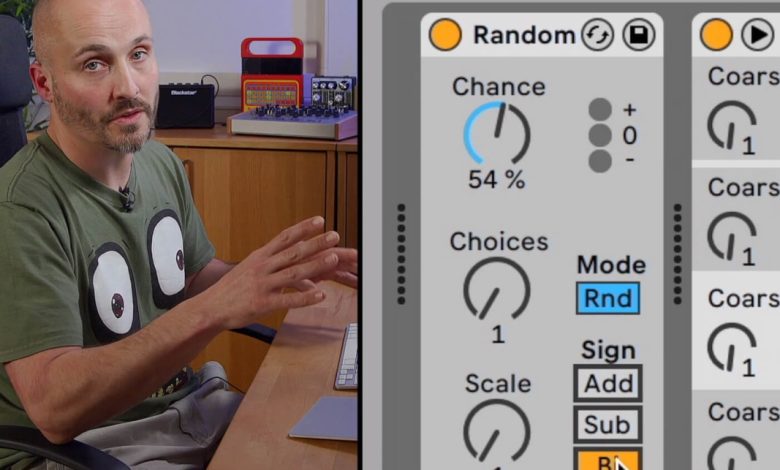
Chance: This parameter controls the probability that a note will be randomly triggered. A value of 100% means that all incoming notes will be randomly triggered, while a value of 0% means that no notes will be triggered.
-
Choices: This parameter controls the number of possible notes that can be triggered randomly. You can choose between 1 and 128 choices.
-
Scale: This parameter controls the musical scale that the random notes will follow. You can choose between several different scales, including Major, Minor, and Pentatonic.
-
Mode: This parameter controls the direction that the random notes will follow. You can choose between Up, Down, and Up/Down.
Creating Random Notes in a Midi Clip
Once you’ve adjusted the Random parameters, you can create random notes in a MIDI clip. To do this, simply draw in some MIDI notes in the clip view, and then enable Random by clicking the “R” button in the MIDI editor. The random notes will then be triggered according to the parameters you’ve set.
Sequencing Random Notes
You can also sequence random notes by creating several MIDI clips with different random parameters and then triggering them in sequence. This can help you create more complex and interesting patterns in your music.
Random is a versatile and powerful tool that can help you add some unexpected and creative elements to your music. Experiment with its parameters and see what kind of interesting patterns you can create!
Exploring Random Parameters
If you’re looking to add some unpredictability and excitement to your Ableton Live productions, experimenting with random parameters can be a great way to achieve that. Random parameters allow you to add variations and unexpected changes to your tracks, keeping them fresh and interesting.
One of the most common ways to use random parameters in Ableton is with the Pitch parameter. By adding some randomness to the pitch of your instruments or samples, you can create interesting melodies and harmonies that you might not have thought of otherwise. To do this, you can use Ableton’s Random MIDI effect, which allows you to add random variations to the pitch of your MIDI notes.
Another way to use random parameters is with the Dry/Wet control. This parameter determines the balance between the dry (unaffected) and wet (processed) signal in an audio effect. By adding some randomness to the Dry/Wet control, you can create interesting and unpredictable effects that can add depth and texture to your tracks.
When exploring random parameters, it’s important to remember that you don’t want to go overboard. Adding too much randomness can make your tracks sound chaotic and messy, so it’s important to use it in moderation. Start with small amounts of randomness and gradually increase it until you find the right balance for your track.
exploring random parameters in Ableton can be a fun and creative way to add some excitement and unpredictability to your productions. Whether you’re using it to add variation to your melodies or to create interesting effects, experimenting with random parameters can help you take your tracks to the next level.
Working with Random Instruments
Randomization is a great tool to create unique sounds in Ableton. This feature can be used in various ways to add some unpredictability and excitement to your music. In this section, we will explore how to work with random instruments in Ableton.
Using the Random MIDI Effect
The Random MIDI Effect is a great tool to add some randomness to your MIDI notes. You can use it to generate random velocities, note lengths, and even randomize the pitch of your notes. To use the Random MIDI Effect, simply drag and drop it onto your MIDI track. You can adjust the amount of randomness by adjusting the chance and range parameters.
Randomizing Parameters in Instruments
Most instruments in Ableton have parameters that can be randomized. For example, in the Operator instrument, you can use the randomize function to generate new waveforms, filter settings, and LFO parameters. Similarly, in the Simpler and Sampler instruments, you can use the randomize function to generate new sample start times, loop points, and filter settings.
Using the Random Instrument Rack
The Instrument Rack in Ableton allows you to combine multiple instruments and effects into a single instrument. You can use the Random feature in the Instrument Rack to generate new combinations of instruments and effects. To use the Random feature, simply right-click on the Instrument Rack and select “Randomize”. You can adjust the amount of randomness by adjusting the chance and range parameters.
randomization is a powerful tool in Ableton that can be used to create unique and interesting sounds. By using the Random MIDI Effect, randomizing parameters in instruments, and using the Random Instrument Rack, you can add some unpredictability and excitement to your music.
Incorporating Random Effects
Random effects can add a unique and creative touch to your music in Ableton. By incorporating randomization into your tracks, you can create melodies and rhythms that you may not have thought of otherwise. In this section, we will discuss how to use random effects in Ableton and explore some of the different ways you can incorporate them into your music.
Using the Random MIDI Effect
The Random MIDI effect in Ableton allows you to add randomization to your MIDI notes. You can use this effect to add variation to your melodies and create new patterns. To use the Random MIDI effect, simply add it to a MIDI track and adjust the settings to your liking. You can adjust the chance of a note being affected by the randomization, the range of the randomization, and the sign and mode of the randomization.
Adding Randomization to Effects
You can also use randomization to add variation to your effects. For example, you can use the Random effect in Ableton to add randomization to parameters such as the filter cutoff or the delay time. This can add a unique and unpredictable quality to your effects, making them sound more organic and less static.
Using Randomization in Different Modes
The Random effect in Ableton can be used in different modes, including sign, mode, and value. The sign mode allows you to add randomization to the sign of the parameter, which can create interesting variations in the direction of the effect. The mode mode allows you to add randomization to the mode of the effect, which can create variations in the type of effect used. Finally, the value mode allows you to add randomization to the value of the effect, which can create variations in the intensity or amount of the effect.
incorporating random effects in Ableton can add a unique and creative touch to your music. By using the Random MIDI effect and adding randomization to your effects, you can create melodies and rhythms that are unpredictable and organic. Experiment with different modes and settings to find the perfect balance of randomness and control in your tracks.
Manipulating Samples with Random
One of the most exciting features of Ableton is the ability to manipulate samples with randomization. By using randomization, you can create an infinite number of unique sounds and patterns that you may not have thought of otherwise.
Using the Random MIDI Device
One way to manipulate samples with randomization is by using the Random MIDI device. This device allows you to add random variation to MIDI notes, which can be used to trigger samples in Ableton.
To use the Random MIDI device:
- Add the Random MIDI device to your MIDI track.
- Set the Chance to 100% and the Choices to the number of samples you want to use.
- Set the Mode to Alt, the Sign to Add, and the Scale to 1.
- Create a pattern in a MIDI clip and press play.
This will trigger the samples randomly, creating a unique sound every time you play the clip.
Creating Round-Robin Sample Playback
Another way to manipulate samples with randomization is by creating round-robin sample playback. This technique allows you to cycle through a set of samples in a specific order, creating a different sound every time.
To create round-robin sample playback:
- Add the Random MIDI device in front of Sampler.
- Set the Chance to 100%, the Choices to the number of samples you have added, and the Mode to Alt.
- Set the Sign to Add and the Scale to 1.
- Create a pattern in a MIDI clip and press play.
This will cycle through the samples in a specific order, creating a different sound every time.
Limiting Sample Variation with Flags
When manipulating samples with randomization, you may want to limit the variation to a specific range. This can be done by using the flags in the Sample View.
To limit sample variation with flags:
- Add Simpler to a MIDI track and drop in a sample of your choosing.
- Use the Classic mode to create an instrument suitable for chords.
- Use the flags in the Sample View to limit the sample variation.
By using the flags, you can create a more even sound and limit any unwanted variation.
randomization is a powerful tool in Ableton that can be used to manipulate samples in a variety of ways. By experimenting with different settings and techniques, you can create unique sounds and patterns that will set your music apart.
Utilizing Round-Robin in Random
Round-robin is a playback technique that allows you to play different sampled versions of the same sound, resulting in natural variations in otherwise static patterns. In Ableton, you can use round-robin in conjunction with the Random MIDI effect to create more dynamic and interesting patterns.
To utilize round-robin in random, you can use either Simpler or Sampler. In Simpler, you can simply load multiple samples into a Drum Rack and set the Round Robin option to “Cycle” in the Chain Selector. This will cycle through each sample with each note played, ensuring that each sample is used before repeating.
In Sampler, you can use the Zone tab to load multiple samples into a single instrument. Then, in the Modulation tab, you can set the LFO to modulate the Zone Selector. By setting the LFO to a random waveform and adjusting the rate and amount, you can create a randomized round-robin effect.
Using round-robin in random can add a level of unpredictability and excitement to your patterns. By varying the samples used in each note, you can create more dynamic and interesting rhythms. Experiment with different samples and settings to find the perfect combination for your track.
round-robin is a powerful technique that can be used to create more natural and dynamic patterns in Ableton. By using it in conjunction with the Random MIDI effect, you can take your patterns to the next level.
Controlling Tempo with Random
One of the most exciting ways to use random in Ableton is by controlling the tempo. Randomizing the tempo can lead to unexpected and creative results, and it’s a great way to break out of creative ruts.
To get started, you can use the “Random” MIDI effect in Ableton. This effect allows you to randomize the tempo within a certain range. Simply drag the “Random” effect onto a MIDI track, and adjust the “Min” and “Max” values to set the range of tempo values you want to use.
Another way to control tempo with random is by using the “Follow Actions” feature in Ableton. This feature allows you to set up a series of random tempo changes that will occur automatically. To use this feature, simply select the clip or clips you want to apply the random tempo changes to, and open the “Clip View” window. From there, click on the “Follow Actions” button, and set the “Action” to “Tempo” and the “Chance” to a value between 0 and 100.
You can also use Max for Live devices to add even more control over the randomization of tempo. For example, the “Random Groove Generator” device allows you to add random variations to the timing and velocity of MIDI notes, which can create interesting rhythmic patterns that evolve over time.
Finally, don’t be afraid to experiment with different types of randomization techniques, such as using probability distributions or custom scripts. With a little bit of creativity and experimentation, you can use randomization to create unique and exciting musical experiences in Ableton.
Conclusion
using randomization in Ableton can open up a world of creative possibilities for producers and musicians. Whether you’re looking to generate unique melodies, create unpredictable rhythms, or add some variation to your sound design, the built-in random devices in Ableton Live can help you achieve your goals.
Throughout this article, we’ve explored a variety of techniques for using randomization in Ableton, including the Random MIDI device, Follow Actions, and the Chord and Arpeggiator MIDI effects. By experimenting with these tools and incorporating them into your workflow, you can discover new sounds and push the boundaries of your music.
Remember, however, that randomization is just one tool in your arsenal, and it should be used thoughtfully and intentionally. While it can be tempting to rely on randomization as a crutch, it’s important to balance it with other creative techniques and your own musical intuition.
We hope that this article has provided you with some useful tips and inspiration for using randomization in Ableton. As always, the best way to learn is to experiment and have fun!