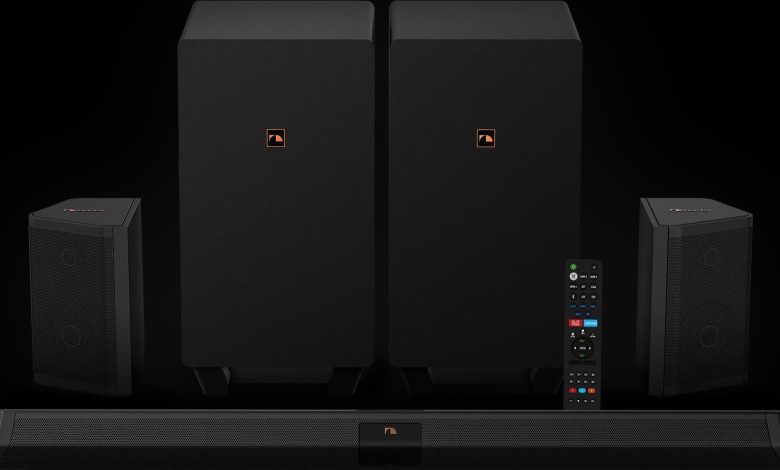
7.2 surround sound is a type of audio system that consists of seven speakers and two subwoofers. This system is designed to provide an immersive audio experience, with sounds coming from all directions, including above and below the listener. The 7.2 system is an upgrade from the more common 5.1 and 7.1 systems, which have five and seven speakers respectively.
The additional subwoofer in the 7.2 system provides a more powerful bass response, making it ideal for movies, music, and games. The system is compatible with a variety of audio formats, including Dolby Atmos and DTS
Understanding Surround Sound
Surround sound is a technology that is designed to immerse you in audio from all sides, all angles, and, increasingly, from all heights too. It is a technology that has come a long way since its inception and has become an essential part of the home theater experience.
Surround sound is achieved by using multiple speakers placed around the room to create a more realistic and immersive audio experience. The most common surround sound configurations are 5.1 and 7.1, with the numbers referring to the number of speakers in the setup. A 5.1 surround sound system has five speakers and one subwoofer, while a 7.1 system has seven speakers and one subwoofer.
The speakers in a surround sound system are typically placed in a specific configuration around the listener. The most common configuration is to place three speakers in front of the listener, with the center speaker placed directly in front and the left and right speakers placed at an angle. Two speakers are then placed behind the listener, with the left and right surround speakers placed at an angle behind the listener.
In recent years, new technologies such as Dolby Atmos and DTS
surround sound is a technology that has become an essential part of the home theater experience. It is achieved by using multiple speakers placed around the room to create a more realistic and immersive audio experience. With new technologies like Dolby Atmos and DTS
The Concept of 7.2 Surround Sound
If you’re looking to take your home theater experience to the next level, you might want to consider a 7.2 surround sound system. This type of system adds an extra subwoofer to the traditional 5.1 or 7.1 setup, providing even more depth and richness to your audio experience.
In a 7.2 surround sound system, there are seven speakers and two subwoofers. The speakers are arranged as follows:
- Front left and right speakers
- Center channel speaker
- Surround left and right speakers
- Rear left and right speakers
The two subwoofers are typically placed in different locations in the room to provide a more balanced bass response.
The benefit of a 7.2 setup over a 5.1 or 7.1 system is that the extra subwoofer provides more bass response, making action movies and music sound more immersive. It’s also great for larger rooms where a single subwoofer might not be enough to fill the space.
When it comes to choosing speakers for your 7.2 surround sound system, it’s important to choose high-quality speakers that can handle the power output of your receiver. Look for speakers with a high sensitivity rating and a wide frequency response range.
a 7.2 surround sound system is a great choice for anyone looking to take their home theater experience to the next level. With more speakers and subwoofers, you’ll be able to hear every detail of your favorite movies and music like never before.
Components of 7.2 Surround Sound System
A 7.2 surround sound system consists of several components that work together to create an immersive audio experience. Let’s take a closer look at each of these components:
Receiver
A receiver is the heart of a 7.2 surround sound system. It receives audio signals from various sources such as a Blu-ray player, gaming console, or streaming device, and distributes them to the appropriate speakers. A receiver also decodes surround sound formats such as Dolby Atmos, DTS
Speakers
A 7.2 surround sound system typically consists of nine speakers – a left, center, and right speaker, two rear speakers, two height speakers, and two subwoofers. The left, center, and right speakers are responsible for reproducing dialogue, music, and sound effects, while the rear speakers create a sense of space and depth. The height speakers add an extra dimension to the soundstage, making it more immersive.
Subwoofers
Subwoofers are responsible for reproducing low-frequency sounds such as explosions, thunder, and bass notes. A 7.2 surround sound system typically includes two subwoofers, which are placed in different locations to create a more even bass response.
Speaker Channels
A 7.2 surround sound system has several speaker channels, including the center channel, left and right front channels, left and right surround channels, and left and right height channels. Each channel has its own driver, which is responsible for reproducing a specific range of frequencies.
a 7.2 surround sound system is a complex audio system that requires several components to work together seamlessly. By investing in a 7.2 surround sound system, you can enjoy a cinematic audio experience in the comfort of your own home.
Difference
Understanding the Role of Each Speaker
To create a 7.2 surround sound system, it is important to understand the role of each speaker. Here is a breakdown of each speaker and its function:
Front Speakers
The front speakers are the most important speakers in any surround sound system. They are responsible for delivering the majority of the audio, including dialogue, sound effects, and music. Typically, a 7.2 surround sound system will have two front speakers, one on the left and one on the right. These speakers should be placed at ear level and angled towards the listener.
Rear Speakers
The rear speakers in a 7.2 surround sound system are responsible for creating an immersive audio experience. They are typically placed behind the listener and are used to create ambient sounds and special effects. In a 7.2 system, there are two rear speakers, one on the left and one on the right.
Center Speaker
The center speaker is responsible for delivering dialogue and other important sounds, such as music and sound effects. It is typically placed above or below the screen and should be angled towards the listener. In a 7.2 system, there is one center speaker.
Subwoofer
The subwoofer is responsible for delivering low-frequency sounds, such as explosions and bass-heavy music. It is typically placed on the floor and can be located anywhere in the room. In a 7.2 system, there are two subwoofers, although one is often sufficient.
Height Speakers
Height speakers are used to create a more immersive audio experience by adding vertical sound to the mix. They are typically placed above the listener and can be either in-ceiling or satellite speakers. In a 7.2 system, there are two height speakers.
By understanding the role of each speaker in a 7.2 surround sound system, you can create a more immersive audio experience that will enhance your movie watching and gaming experiences.
The Impact on Movies and Music
7.2 surround sound has a significant impact on movies and music, providing a more immersive listening experience for the audience. Here are some of the ways in which 7.2 surround sound enhances the sound quality of movies and music:
Movies
- Dialogue: With 7.2 surround sound, dialogue in movies is more distinct and clear, making it easier to follow the plot.
- Effects: Surround sound allows for more precise placement of sound effects, making the movie sound more realistic.
- Bass: The extra subwoofer in a 7.2 setup provides a more powerful bass, adding depth and impact to action scenes.
- Sound Quality: 7.2 surround sound provides a higher quality of sound, making the movie sound more lifelike.
- Listening Experience: With 7.2 surround sound, the audience is fully immersed in the movie, making it a more enjoyable experience.
- Soundstage: The soundstage in a 7.2 setup is wider and more expansive, making the movie sound like it’s coming from all around the audience.
Music
- Sound Quality: With 7.2 surround sound, music is more dynamic and detailed, providing a more immersive listening experience.
- Bass: The extra subwoofer in a 7.2 setup provides a more powerful bass, making music sound more impactful.
- Soundstage: The soundstage in a 7.2 setup is wider and more expansive, making music sound like it’s coming from all around the listener.
7.2 surround sound provides a more immersive and enjoyable listening experience for both movies and music.
Advanced Technologies in 7.2 Systems
7.2 surround sound systems are equipped with advanced technologies that enhance the overall audio experience. Here are some of the technologies that are commonly found in 7.2 systems:
Dolby Atmos
Dolby Atmos is an object-based audio technology that adds height channels to a surround sound system. It creates a three-dimensional sound field that immerses the listener in the audio. Dolby Atmos-enabled speakers are required to fully experience the technology.
Dolby Digital and Dolby Digital Plus
Dolby Digital is a digital audio technology that compresses audio signals to allow for more efficient storage and transmission. It is commonly used for DVDs, Blu-ray discs, and streaming services. Dolby Digital Plus is an enhanced version of Dolby Digital that supports higher bitrates and more channels.
DTS and DTS
DTS is a digital audio technology that is used for DVDs, Blu-ray discs, and streaming services. It supports higher bitrates and more channels than Dolby Digital. DTS
Pro Logic and Dolby Pro Logic IIx
Pro Logic is a matrix decoding technology that is used to create surround sound from stereo sources. It is commonly found in older surround sound systems. Dolby Pro Logic IIx is an enhanced version of Pro Logic that supports more channels and creates a more immersive audio experience.
IMAX Enhanced
IMAX Enhanced is a certification program that ensures that a movie or TV show is optimized for home theater systems. It includes advanced audio and video technologies that are designed to provide a more immersive experience. IMAX Enhanced content is currently available on select streaming services and Blu-ray discs.
7.2 surround sound systems are equipped with advanced technologies that enhance the overall audio experience. These technologies include Dolby Atmos, Dolby Digital, Dolby Digital Plus, DTS, DTS
Setting Up a 7.2 Surround Sound System
Setting up a 7.2 surround sound system is a great way to enhance your home entertainment experience. With this system, you can enjoy immersive sound that surrounds you from all angles. Here’s how to set up your 7.2 surround sound system:
Step 1: Choose the Right AV Receiver
The first step in setting up your 7.2 surround sound system is to choose the right AV receiver. An AV receiver is the heart of your home entertainment system, and it’s responsible for processing and amplifying the audio signals from your TV, Blu-ray player, DVD player, phone, or Xbox One.
When choosing an AV receiver, make sure it has at least 7 channels of amplification and 2 subwoofer outputs. This will allow you to connect all of your speakers and subwoofers to the receiver.
Step 2: Position Your Speakers
Once you have your AV receiver, it’s time to position your speakers. For a 7.2 surround sound system, you’ll need 7 speakers and 2 subwoofers. Here’s how to position them:
- Center speaker: Place it directly above or below your TV, facing your listening position.
- Front left and right speakers: Place them on either side of your TV, facing your listening position.
- Surround left and right speakers: Place them behind your listening position, facing your listening position.
- Rear left and right speakers: Place them behind your listening position, facing the front of the room.
- Subwoofers: Place them on either side of your TV or in the corners of the room.
Step 3: Connect Your Speakers
Once your speakers are positioned, it’s time to connect them to your AV receiver. Here’s how to do it:
- Center speaker: Connect it to the center channel on your AV receiver.
- Front left and right speakers: Connect them to the front left and right channels on your AV receiver.
- Surround left and right speakers: Connect them to the surround left and right channels on your AV receiver.
- Rear left and right speakers: Connect them to the rear left and right channels on your AV receiver.
- Subwoofers: Connect them to the subwoofer outputs on your AV receiver.
Step 4: Calibrate Your System
Finally, it’s time to calibrate your 7.2 surround sound system. This will ensure that all of your speakers are working together to create the best possible sound. Most AV receivers come with an automatic calibration system that will do this for you. If your receiver doesn’t have this feature, you can manually adjust the levels of each speaker until you get the desired sound.
setting up a 7.2 surround sound system is a great way to enhance your home entertainment experience. With the right AV receiver, speakers, and calibration, you can enjoy immersive sound that surrounds you from all angles.
The Pros and Cons of 7.2 Systems
7.2 surround sound systems are gaining popularity among home theater enthusiasts. These systems offer a more immersive audio experience than traditional 5.1 or 7.1 systems. In this section, we’ll take a look at the pros and cons of 7.2 systems.
Advantages of 7.2 Systems
- Better Sound: 7.2 surround sound systems offer better sound quality than traditional 5.1 or 7.1 systems. With two subwoofers, the bass response is improved, resulting in a fuller, more dynamic sound.
- True Surround Sound: With nine channels of audio, 7.2 systems provide true surround sound. This means that sound can be heard from all directions, creating a more immersive audio experience.
- Enhanced Bass Response: The addition of a second subwoofer in a 7.2 system provides enhanced bass response, resulting in a more powerful and impactful sound.
Disadvantages of 7.2 Systems
- Cost: 7.2 surround sound systems can be more expensive than traditional 5.1 or 7.1 systems. This is due to the additional cost of a second subwoofer and the need for a more powerful amplifier.
- Space: 7.2 systems require more space than traditional 5.1 or 7.1 systems. This is due to the need for an additional subwoofer and the placement of speakers to optimize the surround sound experience.
- Virtual Surround Sound: Some people argue that 7.2 systems are not necessary as virtual surround sound technology has improved in recent years. This technology can create a similar surround sound experience without the need for additional speakers.
7.2 surround sound systems offer a more immersive audio experience with better sound quality and enhanced bass response. However, they can be more expensive and require more space than traditional 5.1 or 7.1 systems. Additionally, some people argue that virtual surround sound technology has improved enough to make additional speakers unnecessary.
Alternative Surround Sound Systems
While 7.2 surround sound is a great option for an immersive home theater experience, there are other surround sound systems available that might better suit your needs and budget.
Soundbars
Soundbars are a popular alternative to a full surround sound system. They offer a simple and compact solution to enhance your TV’s audio. Most soundbars come with a built-in subwoofer, while some also have satellite speakers for a more immersive experience.
Stereo Systems
Stereo systems are another option for those who want a more traditional audio setup. They typically consist of two speakers and a receiver, which can be used to play music, movies, and TV shows. While they may not offer the same level of immersion as a surround sound system, they can still provide high-quality audio.
2.1 and 3.1 Systems
2.1 and 3.1 systems are a step up from a soundbar, offering a more immersive audio experience. The numbers refer to the number of speakers and subwoofers in the system. A 2.1 system has two speakers and one subwoofer, while a 3.1 system has three speakers and one subwoofer.
5.1 and 7.1 Systems
5.1 and 7.1 systems offer a full surround sound experience. A 5.1 system has five speakers and one subwoofer, while a 7.1 system has seven speakers and one subwoofer. These systems provide a more immersive audio experience than soundbars or stereo systems.
6.1 and 9.1 Systems
6.1 and 9.1 systems are less common than 5.1 and 7.1 systems but offer even more immersive audio. A 6.1 system has six speakers and one subwoofer, while a 9.1 system has nine speakers and one subwoofer. These systems are best suited for larger rooms where you can fully take advantage of the additional speakers.
7.1.2 Systems
7.1.2 systems are the latest addition to the surround sound family. These systems add two height speakers to a 7.1 system, providing a more immersive audio experience. The additional height speakers create a more realistic soundstage, making it feel like you’re in the middle of the action. However, these systems require a ceiling that can accommodate the height speakers.
there are many alternatives to a 7.2 surround sound system that can still provide an immersive audio experience. Consider your budget and room size when choosing a system that’s right for you.
Future of Surround Sound Systems
Surround sound technology has come a long way over the years, and there is no doubt that it will continue to evolve in the future. Here are some of the ways that surround sound systems are expected to change in the coming years:
Wireless Technology
One of the most significant trends in surround sound technology is the move towards wireless systems. Wireless speakers are becoming more popular as people look for ways to reduce clutter and simplify their home entertainment setups. With wireless speakers, you can enjoy high-quality audio without the need for messy cables and wires.
Compatibility
Another trend in surround sound technology is increased compatibility. Many people use a variety of different devices to consume media, including smartphones, tablets, and gaming consoles. In the future, it is likely that surround sound systems will become even more compatible with these devices, making it easier than ever to enjoy high-quality audio.
Application Integration
As more people turn to streaming services and music streaming, it is likely that surround sound systems will become more integrated with these applications. This will allow users to enjoy high-quality audio while streaming their favorite movies, TV shows, and music.
Upgrades
As technology continues to advance, it is likely that existing surround sound systems will become outdated. However, many manufacturers are working on ways to upgrade existing systems, so that users can continue to enjoy high-quality audio without having to purchase an entirely new system.
Gaming
As gaming continues to grow in popularity, it is likely that surround sound systems will become more important for gamers. Many games are designed to take advantage of high-quality audio, and a good surround sound system can help to immerse gamers in the action.
Bluetooth
Finally, Bluetooth technology is becoming increasingly important for surround sound systems. With Bluetooth, users can easily connect their devices to their surround sound systems, allowing them to enjoy high-quality audio without the need for cables or wires.
the future of surround sound systems looks bright. With continued advancements in technology, it is likely that we will see even more immersive and high-quality audio experiences in the years to come.