


Apple’s AirPods have been a popular choice for wireless earbuds since their initial release in 2016. With the release of the AirPods 2 in 2019 and the AirPods 3 in 2021, many users are wondering what the differences are between the two models.
The biggest difference between the AirPods 2 and AirPods 3 is the design. The AirPods 3 have a shorter stem and a more rounded shape compared to the AirPods 2. Additionally, the AirPods 3 come with interchangeable silicone tips and are available in three sizes, while the AirPods 2 do not have interchangeable tips.
Another difference between the two models is the chip inside. The AirPods 3 use the newer H1 chip, which provides faster connectivity and improved battery life compared to the AirPods 2. The AirPods 3 also have spatial audio support, which creates a more immersive listening experience for compatible content.
Design and Comfort
Physical Differences
The most noticeable difference between the AirPods 2 and AirPods 3 is their physical design. The AirPods 3 have a shorter stem and a more rounded shape compared to the AirPods 2. They also have a wider grille for improved sound quality. Moreover, the AirPods 3 come with different silicone ear tips to offer a better fit for different ear sizes.
Comfort and Fit
The AirPods 3 have been designed with comfort and fit in mind. They come with three sizes of soft silicone ear tips that can be swapped out to ensure a perfect fit. The ear tips create a better seal in the ear canal, which helps to improve the overall sound quality and reduce external noise. Additionally, the AirPods 3 have a more ergonomic design, which makes them more comfortable to wear for extended periods of time.
In terms of weight, the AirPods 3 are slightly heavier than the AirPods 2, weighing in at 4.6 grams per earbud compared to 4 grams for the AirPods 2. However, this difference is hardly noticeable and does not affect the overall comfort of the AirPods 3.
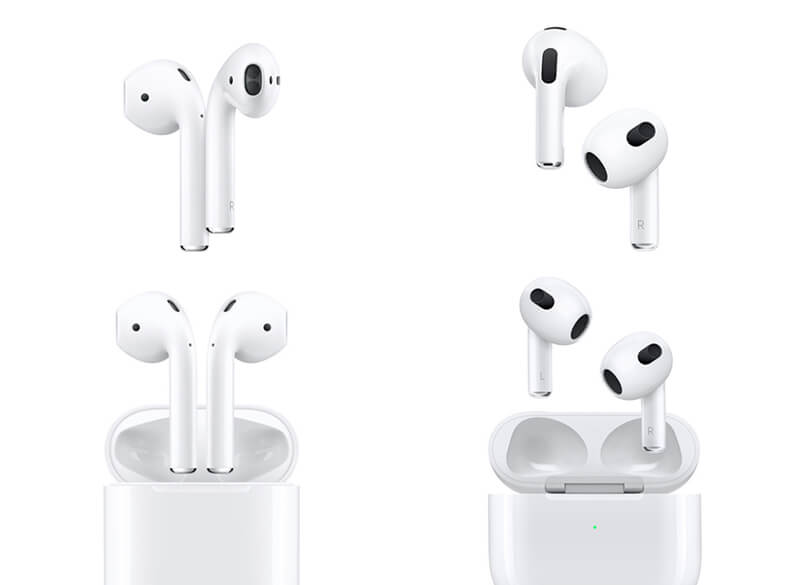
The AirPods 3 have been designed with comfort and fit in mind. The new silicone ear tips and the more ergonomic design make them more comfortable to wear for extended periods of time, while the wider grille and improved sound quality offer a better listening experience.
| Feature | AirPods (2nd generation) | AirPods (3rd generation) |
|---|---|---|
| Release Date | March 2019 | October 2021 |
| Design | Classic AirPods design | Contoured design with shorter stems |
| Audio Technology | Standard Apple audio technology | Custom driver and high dynamic range amplifier, Spatial Audio with dynamic head tracking |
| Waterproof | No | IPX4 (sweat and water resistant) |
| Active Noise Cancellation | No | No (but better fit may improve passive noise reduction) |
| Battery Life (Talk Time) | Up to 3 hours | Up to 4 hours |
| Battery Life (Music) | Up to 5 hours, 24 hours with case | Up to 6 hours, 30 hours with case |
| Wireless Charging | Optional (with wireless charging case) | Standard |
| Chip | H1 chip | H1 chip |
| Bluetooth Version | 5.0 | 5.0 |
| Spatial Audio | No | Yes |
| Adaptive EQ | No | Yes |
| MagSafe Charging | No (unless you get the wireless charging case model which has a Qi-compatible case) | Yes (MagSafe, Qi, and Lightning charging) |
| Price (at launch) | $159 (with standard charging case), $199 (with wireless charging case) | $179 |
| Weight | 4 grams each bud | 4.28 grams each bud |
| Ear Tips | One size fits all (hard plastic) | One size fits all (contoured design) |
| Controls | Tap control | Force sensor control |
| Hey Siri | Yes | Yes |
| Beamforming Microphones | Yes | Yes |
| Skin-Detect Sensors | No | Yes (for automatic pausing when removed from ear) |
| Colors Available | White | White |
Sound Quality and Performance
When it comes to sound quality and performance, the AirPods 3 have a clear advantage over their predecessor, the AirPods 2. Let’s take a closer look at the audio enhancements and noise cancellation features that set the AirPods 3 apart.
Audio Enhancement
The AirPods 3 come with adaptive EQ, which automatically tunes the music to the shape of your ear. This means that you get a more personalized and immersive listening experience. The AirPods 2, on the other hand, do not have this feature and rely on a more generic sound profile.
Additionally, the AirPods 3 have spatial audio with dynamic head tracking, which creates a more realistic and three-dimensional soundstage. This feature is perfect for those who want to feel like they are in the middle of the action while listening to music or watching movies. The AirPods 2 do not have this feature.
Noise Cancellation
The AirPods 3 also have noise cancellation, which is a game-changer for those who want to block out unwanted background noise. This feature uses advanced algorithms to analyze the sound around you and create an opposite sound wave that cancels it out. The result is a more peaceful and focused listening experience.
The AirPods 2 do not have noise cancellation, which means that you will still hear some of the background noise while listening to music or taking calls. While this may not be a deal-breaker for everyone, it is certainly a significant advantage of the AirPods 3.
The AirPods 3 offer significant improvements in sound quality and performance over the AirPods 2. With adaptive EQ, spatial audio, and noise cancellation, the AirPods 3 provide a more immersive and personalized listening experience.
Battery Life
When it comes to battery life, both AirPods 2 and AirPods 3 offer similar performance. They both offer up to 5 hours of listening time on a single charge, and up to 24 hours of listening time with the charging case.
However, the AirPods 3 do come with a new MagSafe charging case that can provide up to 30 hours of listening time. Additionally, the AirPods 3 have a new low-power mode that can extend the battery life even further.
It’s worth noting that battery life can vary depending on usage and other factors, such as volume levels and distance from the device. But overall, both AirPods 2 and AirPods 3 offer solid battery life performance that should last throughout the day.
If you’re looking for a slight edge in battery life, the AirPods 3 may be the way to go thanks to the MagSafe charging case and low-power mode. But if battery life isn’t a major concern, then either model should suffice.
Connectivity and Compatibility
Bluetooth Technology
Both the AirPods 2 and AirPods 3 use Bluetooth technology to connect to your devices. However, the AirPods 3 use the latest Bluetooth 5.2 technology, which provides faster and more stable connections compared to the AirPods 2’s Bluetooth 5.0. This means that the AirPods 3 have a better range and are less likely to experience audio drops or disconnections.
Device Compatibility
The AirPods 3 are designed to work with the latest Apple devices, including iPhone 13, iPad Pro, and MacBook Pro models with M1 chip. They require iOS 15, iPadOS 15, or macOS Monterey or later to function. On the other hand, the AirPods 2 are compatible with a wider range of Apple devices, including older models such as iPhone 6s, iPad Air 2, and Macs running macOS Sierra or later.
Both the AirPods 2 and AirPods 3 can easily switch between your Apple devices, thanks to the Apple-designed H1 chip. This means that you can use your AirPods with your iPhone, iPad, Mac, and Apple Watch without having to manually switch connections. However, the AirPods 3 offer a more seamless switching experience, as they can detect which device you’re using and automatically connect to it.
Additional Features
Water Resistance
One of the most significant upgrades in the AirPods 3 is the water resistance feature. With an IPX4 rating, the AirPods 3 can withstand splashes of water, making them ideal for workouts and outdoor activities. However, it’s important to note that they are not completely waterproof, and users should avoid submerging them in water.
Spatial Audio
Another exciting feature of the AirPods 3 is spatial audio. This feature uses advanced algorithms to create a surround sound experience, making it feel like the sound is coming from all directions. It’s an excellent addition for those who enjoy watching movies or listening to music on their AirPods.
The AirPods 3 also come with a new design that looks more akin to the AirPods Pro, better sensors, more touch controls, and an IPX4 rating. They offer a lot of value and are the best basic AirPods we’ve seen yet. With a six-hour battery life (30 with MagSafe case), users can enjoy their music and podcasts for longer periods without needing to recharge.
Price Comparison
One of the most significant differences between AirPods 2 and AirPods 3 is the price. The AirPods 2 with a standard charging case are priced at $159, while the AirPods 3 with a standard charging case cost $179. This means that the AirPods 3 are $20 more expensive than the AirPods 2.
However, it is essential to note that the AirPods 3 come with several new features that justify the higher price. For instance, the AirPods 3 have a new design that looks more like the AirPods Pro, better sensors, more touch controls, and an IPX4 rating. Additionally, the AirPods 3 offer spatial audio and a six-hour battery life, which is an improvement from the five-hour battery life of the AirPods 2.
If you are on a tight budget, the AirPods 2 might be a better option for you. However, if you are looking for the latest features and design, the AirPods 3 are worth the extra $20. Ultimately, the choice between the two models depends on your needs and preferences.

