

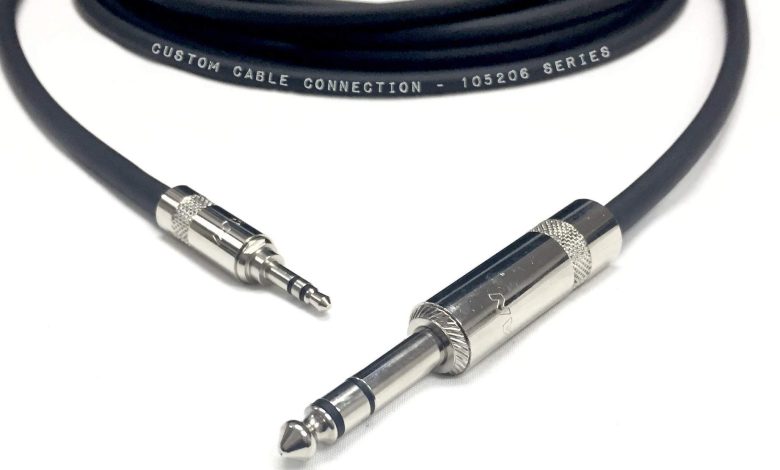
When it comes to audio equipment, choosing the right cable can make a big difference in sound quality. One important cable to consider is the line out cable. This cable is used to connect audio devices to speakers, amplifiers, or other audio equipment.
There are several types of line out cables to choose from, including RCA cables, 3.5mm AUX cables, and component video cables. RCA cables are a common choice for connecting audio devices to amplifiers or receivers. They have two connectors, one for the left audio channel and one for the right audio channel, and are typically color-coded with red and white connectors. 3.5mm AUX cables are another popular option, especially for connecting mobile devices or laptops to speakers or headphones. These cables have a single connector that plugs into the audio output of the device and a second connector that plugs into the audio input of the destination device. Component video cables are also an option for line out connections, although they are less commonly used for this purpose.
Choosing the right line out cable depends on the specific audio equipment you are using and the type of connection you need to make. It’s important to choose a high-quality cable to ensure the best possible sound quality. In the following sections, we’ll take a closer look at some of the different types of line out cables and their uses.
Understanding Line Out and Line Level
When it comes to audio equipment, it’s important to understand the difference between line out and line level. Line out is a type of output that sends audio signals from a device to another device, such as an amplifier or a mixer. Line level refers to the strength of the audio signal that is being sent.
A line level signal is typically stronger than a mic level signal, but weaker than a speaker level signal. It is usually around one volt, or 0 dBV. This means that a line level signal is about 1,000 times greater than a mic level signal. Most audio mixers have a line level output that is suitable for connection to a power amplifier, signal processor, or audio recorder.
It’s important to note that line level signals are typically unbalanced, meaning they have only two conductors: a signal conductor and a ground conductor. This is in contrast to balanced signals, which have three conductors: a signal conductor, a ground conductor, and a shield conductor.
When connecting a line out to a line level input, it’s important to use the correct type of cable. The most common type of cable used for line level signals is the RCA cable. RCA cables are usually color-coded red (right) and white (left) for stereo interconnection. They are smaller cinch type connectors, often used for connecting “line level” audio signals in consumer products.
line out and line level are important concepts to understand when working with audio equipment. Line out refers to the type of output that sends audio signals from one device to another, while line level refers to the strength of the signal being sent. When connecting a line out to a line level input, it’s important to use the correct type of cable, such as an RCA cable.
Types of Cables for Line Out
When it comes to connecting your audio device to an amplifier or speaker, choosing the right cable is crucial. There are different types of cables available in the market, each with its own unique features and benefits. In this section, we will discuss some of the most common types of cables for line out.
3.5mm Audio Cable
One of the most common audio cables is the 3.5mm audio cable, which is also known as a headphone jack or aux cable. This type of cable is widely used to connect smartphones, laptops, and other portable devices to speakers or amplifiers. It is a cost-effective option and is available in different lengths.
RCA Cable
RCA cables are another popular type of audio cable. They are widely used to connect audio devices to amplifiers and speakers. RCA cables are available in different colors to help you identify the left and right audio channels. They are also available in different lengths and can be used for both analog and digital signals.
XLR Cable
XLR cables are commonly used in professional audio settings, such as recording studios and live performances. They are designed to provide a balanced audio signal, which helps to reduce noise and interference. XLR cables are available in different lengths and are often used to connect microphones to mixers or amplifiers.
HDMI Cable
HDMI cables are commonly used to connect audio and video devices, such as TVs, Blu-ray players, and gaming consoles. They are capable of transmitting high-quality audio signals and are available in different lengths. HDMI cables are also compatible with different versions of HDMI, such as HDMI 1.4 and HDMI 2.0.
USB-C Cable
USB-C cables are a newer type of cable that is becoming increasingly popular. They are capable of transmitting audio, video, and data signals and are often used to connect smartphones and laptops to external displays or speakers. USB-C cables are available in different lengths and can be used for both analog and digital signals.
When choosing a cable for line out, it is important to consider your specific needs and requirements. Consider the length of the cable, the type of signal you need to transmit, and the devices you need to connect. By choosing the right cable, you can ensure that you get the best possible audio quality from your devices.
Connectors and Adapters
When it comes to connecting your line out to an amplifier or speaker, you’ll need the right kind of cable and connectors. Here are some of the most common connectors and adapters you’ll encounter:
1. XLR Connectors
XLR connectors are commonly used in professional audio equipment like microphones, mixers, and speakers. They are known for their durability and ability to provide balanced audio signals. XLR connectors have three pins and are available in male and female versions.
2. RCA Connectors
RCA connectors are commonly used in consumer audio equipment like TVs, DVD players, and home theater systems. They are also known as phono connectors and have two pins. RCA connectors are easy to use and are available in male and female versions.
3. Jack Plugs
Jack plugs are also known as phone plugs or audio jacks. They are commonly used in headphones, guitar amps, and other audio equipment. Jack plugs come in different sizes, including 6.35mm (1/4 inch) and 3.5mm (1/8 inch).
4. Adapters
Adapters are useful when you need to connect different types of connectors. For example, if you have a device with an XLR output and a speaker with an RCA input, you’ll need an adapter to connect them. Adapters are available in different configurations, including XLR to RCA, RCA to jack, and jack to XLR.
When choosing a cable for your line out, make sure to select the right type of connector for your equipment. You may also need to consider the length of the cable, the quality of the materials, and other factors. If you’re not sure which type of cable to use, consult with a professional audio technician or do some research online.
Balanced vs Unbalanced Signals
When it comes to choosing the right cable for line out, you may have come across the terms “balanced” and “unbalanced” signals. But what do these terms mean, and how do they differ from each other?
Balanced Signals
A balanced signal is a type of audio signal that uses two conductors to transmit the audio signal. These conductors are usually referred to as the “hot” and “cold” conductors. The “hot” conductor carries the audio signal, while the “cold” conductor carries an inverted version of the same signal. This results in a signal that is less susceptible to noise and interference.
Professionals often use balanced cables to reduce noise created by interference from electromagnetic and radio frequency sources, like AC mains, fluorescent lights, motors, and cell phones. This is because the two conductors carry the same signal, but with opposite polarity, which cancels out any interference picked up along the cable run.
Unbalanced Signals
An unbalanced signal, on the other hand, uses a single conductor to transmit the audio signal, with the ground acting as the return path. This type of cable is often used for shorter cable runs, like those found in home audio setups. Unbalanced cables are less expensive and easier to manufacture than balanced cables, which makes them a popular choice for many consumers.
However, unbalanced cables are more susceptible to noise and interference, especially over long cable runs. This is because the single conductor is more prone to picking up interference from external sources.
balanced cables are the preferred choice for professional audio setups, while unbalanced cables are more commonly used in home audio setups. If you’re unsure which type of cable is best for your needs, it’s always a good idea to consult with an audio professional or do some research to determine which type of cable will work best for your specific setup.
Impedance and Resistance in Cables
When it comes to selecting a cable for line out, it’s crucial to understand the concepts of impedance and resistance. These two factors can significantly impact the quality of the sound you’re getting from your equipment.
Impedance
Impedance is the total opposition to the flow of alternating current (AC) in a circuit. In audio cables, impedance is measured in ohms and can range from 10 ohms to several thousand ohms. The impedance of a cable can affect the overall sound quality of your audio system.
A cable with low impedance can deliver more power to the speakers, but it can also be more susceptible to interference and noise. On the other hand, a cable with high impedance can help reduce noise and interference, but it may not deliver enough power to the speakers, resulting in a weak and distorted sound.
Resistance
Resistance is the measure of how much a material opposes the flow of electric current. In audio cables, resistance is measured in ohms per foot or meter. The higher the resistance, the more energy is lost as heat, resulting in a weaker signal.
When selecting a cable for line out, it’s essential to choose one with low resistance. This will ensure that the signal remains strong and clear throughout the entire length of the cable. It’s also important to choose a cable with a thick conductor, as a thicker conductor will have less resistance than a thinner one.
when selecting a cable for line out, it’s crucial to consider both impedance and resistance. A cable with low impedance can deliver more power to the speakers, but it can also be more susceptible to interference and noise. Meanwhile, a cable with low resistance will ensure that the signal remains strong and clear throughout the entire length of the cable.
Shielding and Interference
When it comes to choosing a cable for line out, shielding and interference are important factors to consider. Shielding refers to the protective layer surrounding the cable that prevents interference from external sources. Interference can come from various sources such as radio waves, electrical equipment, and other cables.
There are two types of shielding commonly used for cables: foil and braid. Foil shielding uses a thin layer of aluminum attached to a carrier such as polyester to add strength and ruggedness. It provides 100% coverage of the conductors it surrounds, which is good. Braid shielding, on the other hand, uses a mesh of small wires that are braided around the conductor. It provides better flexibility and durability than foil shielding, but it may not offer 100% coverage.
To avoid interference when running cables, it is important to choose the right type of cable. Quad-shield coaxial cable contains an extra inner metal shield that keeps electrical, radio, and other types of interference out of the cable. Avoid purchasing inexpensive, thin cabling as this type of coaxial cabling offers little interference protection. If you are running coaxial cable for a computer network, avoid purchasing thinnet coaxial cable.
To further reduce interference, use shielded conduit when wiring your home. These conduits are more expensive than the non-shielded variety and should only be used when necessary to place different kinds of cables near each other. Be sure to buy flexible conduit if you must use it in corners.
If you encounter interference, there are a few things you can do to help reduce it. A high-pass filter may reduce interference to an antenna-connected television or VCR. A common-mode filter should be tried first on TVs or VCRs connected to a cable system. An AC-line interference filter may help with electrical or radio interference. These items can be purchased locally or by mail order.
shielding and interference are important factors to consider when choosing a cable for line out. Foil and braid shielding are the two common types of shielding used for cables. To reduce interference, use quad-shield coaxial cable, avoid purchasing inexpensive, thin cabling, and use shielded conduit when wiring your home. If you encounter interference, try using a high-pass filter, common-mode filter, or AC-line interference filter.
Line Out Devices
Line out is a type of audio output that is commonly found on various devices such as desktop computers, professional audio devices, mixers, audio interfaces, and smartphones. It is used to connect the device to an external audio device such as speakers or headphones.
Desktop Computers
Most desktop computers come with a built-in sound card that has a line out jack. This allows you to connect your computer to external speakers or headphones. If you want to improve the sound quality, you can also invest in a dedicated sound card that has a better line out jack.
Professional Audio Devices
Professional audio devices such as amplifiers, receivers, and DACs also have line out jacks. These devices are designed to deliver high-quality audio and are often used in recording studios or for live performances.
Mixers
Mixers are used to combine multiple audio signals and control their levels. They often have multiple line out jacks that allow you to connect them to external devices such as speakers or headphones.
Audio Interfaces
Audio interfaces are used to connect your computer to external audio devices such as microphones, instruments, and speakers. They often have multiple line out jacks that allow you to connect them to different devices.
Smartphones
Most smartphones have a headphone jack that can also be used as a line out jack. This allows you to connect your phone to external speakers or headphones and enjoy high-quality audio.
line out jacks are an essential feature for any audio device that needs to connect to external speakers or headphones. Whether you’re a professional musician or just an avid music listener, having a good line out cable can make a big difference in the quality of your audio experience.
Microphones and Keyboards
When it comes to connecting microphones and keyboards to a line out, there are a few things to consider. The type of cable you need will depend on the type of connector your microphone or keyboard has, as well as the distance between your device and the line out.
For microphones, it’s important to use a balanced cable to ensure a noise-free signal. XLR cables are the most common type of balanced cable used for microphones. They have three pins – one for the ground, one for the positive signal, and one for the negative signal. TRS cables can also be used for microphones, but they are less common. They have two rings on the connector instead of one, which allows for a balanced connection.
For keyboards, the type of cable you need will depend on the output of your keyboard. Most keyboards have either a quarter-inch (6.35mm) or a 3.5mm output. If your keyboard has a quarter-inch output, you can use a standard instrument cable to connect to the line out. If your keyboard has a 3.5mm output, you will need to use a cable with a 3.5mm connector on one end and a quarter-inch connector on the other end.
When choosing a cable for your microphone or keyboard, it’s important to consider the length of the cable. Longer cables can result in signal loss and noise, so it’s best to use the shortest cable possible. If you need to use a longer cable, consider using a cable with a larger gauge wire to minimize signal loss.
when connecting microphones and keyboards to a line out, it’s important to choose the right cable for your device and to keep the cable length as short as possible. By doing so, you can ensure a clear and noise-free signal.
Amplifiers and Speakers
When connecting an amplifier or speaker to a line out port, it is important to choose the appropriate cable type to ensure optimal performance. The cable type will depend on the type of amplifier or speaker being used.
Amplifiers
When connecting an amplifier to a line out port, it is important to consider the type of amplifier being used. Some amplifiers require a specific cable type, while others are more versatile.
- Tube amplifiers: These amplifiers require a cable with a high impedance, such as a coaxial cable, to ensure optimal performance.
- Solid-state amplifiers: These amplifiers are more versatile and can use a variety of cable types, including coaxial, RCA, and balanced cables.
When selecting a cable for an amplifier, it is important to consider the length of the cable. Longer cables can result in a loss of signal quality, so it is best to choose a cable that is just long enough to reach the amplifier.
Speakers
When connecting speakers to a line out port, it is important to consider the type of speaker being used. Some speakers require a specific cable type, while others are more versatile.
- Passive speakers: These speakers require a cable with a high impedance, such as a coaxial or balanced cable, to ensure optimal performance.
- Powered speakers: These speakers have a built-in amplifier and require a different type of cable, such as an RCA or XLR cable.
When selecting a cable for a speaker, it is important to consider the length of the cable. Longer cables can result in a loss of signal quality, so it is best to choose a cable that is just long enough to reach the speaker.
when connecting an amplifier or speaker to a line out port, it is important to choose the appropriate cable type to ensure optimal performance. The cable type will depend on the type of amplifier or speaker being used, and it is important to consider the length of the cable to avoid a loss of signal quality.
Cable Connectors and Hardware
When it comes to line out cables, the connectors and hardware used can make a big difference in the quality of the audio signal. Here are some things to keep in mind when selecting cable connectors and hardware:
Connector Types
There are several types of connectors commonly used for line out cables, including RCA, XLR, and 1/4-inch TRS. RCA connectors are the most common and are often used for consumer audio equipment. XLR connectors are typically used for professional audio equipment and offer a more secure connection. 1/4-inch TRS connectors are often used for instruments and can also be used for line out connections.
Cable Types
There are also different types of cables that can be used for line out connections. Coaxial cables are commonly used for RCA connectors and offer good signal quality. Twisted pair cables are often used for XLR connectors and offer better noise rejection. Shielded cables are also available and can help reduce interference.
Hardware
In addition to the connectors and cables, it’s important to consider the hardware used for line out connections. This can include things like wall plates, jacks, and patch panels. It’s important to select high-quality hardware that is designed for audio applications to ensure the best possible signal quality.
selecting the right cable connectors and hardware is important for getting the best possible audio signal from your line out connections. By considering the connector types, cable types, and hardware options available, you can ensure that your audio setup is optimized for the best possible performance.
Power Cables and Electrical Codes
When selecting a power cable for line out, it’s essential to consider the National Electrical Code (NEC) requirements. The NEC provides guidelines for safe electrical installations and is updated every three years to reflect new technologies and safety concerns.
One of the primary concerns when selecting a power cable for line out is the ampacity rating. The ampacity rating determines the maximum amount of current that a cable can safely carry. Choosing a cable with an ampacity rating that is too low can result in overheating and potential fire hazards.
Another critical factor to consider is the type of cable insulation. The NEC specifies minimum insulation requirements based on the voltage rating of the cable. Cables with inadequate insulation can lead to electrical shock, fires, and other safety hazards.
It’s also important to consider the cable’s installation location and the potential exposure to moisture, chemicals, and other environmental factors. Outdoor cables, for instance, must be rated for outdoor use and protected against moisture and corrosion.
When installing power cables, it’s important to follow the NEC’s installation requirements. These requirements cover everything from cable support and protection to grounding and bonding. Adhering to these requirements is critical for ensuring safe and reliable electrical installations.
selecting the right power cable for line out requires careful consideration of the NEC requirements, including the ampacity rating, insulation type, installation location, and installation requirements. By following these guidelines, you can ensure a safe and reliable electrical installation.
Moisture and Insulation
When it comes to choosing a cable for line out, moisture and insulation are important factors to consider. Moisture can cause serious damage to cables, leading to poor performance and even failure. Insulation is crucial for protecting cables from moisture and ensuring they function properly.
In wet locations, it is especially important to choose a cable with moisture-resistant insulation. Moisture-resistant cables are designed to withstand exposure to water and other liquids, making them ideal for use in damp or wet environments. These cables typically have a moisture-resistant outer jacket and may also have additional layers of insulation to protect against moisture.
It is also important to consider the type of insulation used in the cable. Some types of insulation are better suited for wet environments than others. For example, PVC insulation is not recommended for use in wet locations, as it can break down over time when exposed to moisture. Instead, cables with cross-linked polyethylene (XLPE) insulation are a better choice for wet locations, as they are more resistant to moisture and have a longer lifespan.
When selecting a cable for line out, it is important to choose one with the appropriate level of insulation. Too little insulation can leave the cable vulnerable to moisture damage, while too much insulation can make the cable bulky and difficult to work with. It is important to strike a balance between insulation and flexibility, choosing a cable that is both moisture-resistant and easy to work with.
when choosing a cable for line out, it is important to consider moisture and insulation. Moisture-resistant cables with appropriate insulation are essential for protecting cables from damage and ensuring they function properly. When working in wet locations, it is especially important to choose a cable with the appropriate level of moisture resistance and insulation to ensure long-lasting performance.
Materials Used in Cables
When it comes to line out cables, there are a variety of materials used to create them. Some of the most common materials used in cables include copper, ground wire, and wire.
Copper
Copper is one of the most commonly used materials in cables due to its high conductivity and low resistance. It is also relatively inexpensive compared to other materials, making it an ideal choice for manufacturers. Copper is often used as the inner conductor of a coaxial cable, which is then surrounded by a dielectric material and an outer conductor.
Ground Wire
Ground wire is another important component of many line out cables. It is used to provide a path for excess electrical current to flow safely to ground. This helps to protect both the equipment and the user from electrical shock. Ground wire is typically made from copper or another highly conductive material.
Wire
The wire used in line out cables can vary depending on the specific application. For example, some cables may use stranded wire, which is made up of multiple small wires twisted together. This can help to increase flexibility and reduce the risk of damage from bending. Other cables may use solid wire, which is a single, solid piece of wire. Solid wire is often used in applications where the cable will not be subject to frequent movement or bending.
the materials used in line out cables play an important role in determining their performance and durability. By understanding the different materials used in these cables, you can make an informed decision when choosing the right cable for your needs.


