

What Kind of Instrument is an Organ? A Quick Guide to Understanding this Majestic Instrument

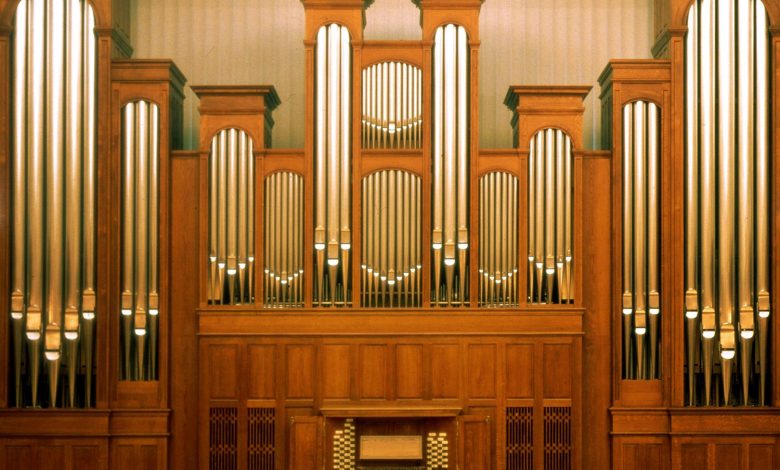
The organ is a musical instrument that has been around for centuries and has a rich history. It is a keyboard instrument that produces sound through a series of pipes, and its sound is often associated with churches and religious ceremonies. The organ is a complex instrument that requires skill and practice to play, and it has a unique sound that is instantly recognizable.
The organ has a variety of different types and sizes, ranging from small portable instruments to massive church organs with thousands of pipes. The pipes are arranged over a wind chest that is connected to the keys via a set of pallets, or valves, and fed with a supply of air by electrically or mechanically activated bellows. Each rank is brought into action by a stop that is connected by levers, or electrically, to a slider. The pipe organ is a time-honored musical instrument that makes use of mechanical, electrical, electronic, and/or pneumatic (air-driven) components.
Organ: A Musical Instrument
The organ is a keyboard and wind instrument that produces sound by blowing air through a set of pipes. It is one of the earliest keyboard instruments and has been used in churches for centuries. In addition to its use in religious settings, the organ is also played as a concert instrument in both classical and popular music.
Origins and History
The origins of the organ can be traced back to ancient Greece, where the hydraulis, a type of water-powered organ, was invented. The hydraulis used water pressure to produce sound, and the instrument was used in ancient theaters and public events.
Over time, the hydraulis was refined and developed into the pipe organ, which became a popular instrument in churches throughout Europe. The first pipe organs were large and complex instruments, with multiple keyboards and hundreds of pipes.
Types of Organ
There are several different types of organ, each with its own unique characteristics and sound. Some of the most common types of organ include:
-
Pipe organ: The pipe organ is the most well-known type of organ and is often used in churches and concert halls. It consists of a large set of pipes that are arranged over a wind chest and played using a keyboard.
-
Electric organ: The electric organ is a type of organ that uses electricity to produce sound. It is often used in popular music and has a distinctive sound.
-
Digital organ: The digital organ is a modern type of organ that uses digital technology to produce sound. It is often used in churches and has a more versatile sound than traditional pipe organs.
the organ is a complex and versatile instrument that has been used for centuries in religious and secular settings. Its unique sound and ability to produce a wide range of tones make it a popular choice for musicians and music lovers alike.
Understanding Organ Music
The organ is a keyboard instrument that produces sound through a series of pipes. It is operated by the player’s hands and feet, and the pressurized air produces notes through the pipes. The organ is an ancient musical instrument that has been played throughout history, particularly during races and games in the Ancient Greek and Ancient Roman world.
Famous Organ Compositions
Organ music has a rich history of famous compositions. Some of the most well-known pieces include Bach’s Toccata and Fugue in D minor, Handel’s Organ Concertos, and Widor’s Toccata from Symphony No. 5.
Notable Organists
There have been many notable organists throughout history. One of the most famous was Johann Sebastian Bach, who was known for his virtuosic playing and innovative compositions. Other notable organists include Olivier Messiaen, Marcel Dupré, and Charles-Marie Widor.
Organ music has a unique sound and style that has captured the hearts of many music lovers throughout history. Whether you are a seasoned organist or a newcomer to the instrument, there is something magical about the sound of the organ that is sure to inspire and delight.
Organ Construction and Mechanics
Components
The organ is a complex musical instrument that uses mechanical, electrical, electronic, and/or pneumatic components to produce sound. The main components of an organ are:
- Pipes: These produce sound when air is blown through them. Pipes can be made of metal or wood, and they come in different shapes and sizes to produce different tones.
- Wind Chest: This is the box that holds the pipes and supplies them with air. The wind chest is connected to the keyboard through a set of valves and pallets.
- Keyboard: This is the part of the organ that the musician plays to produce sound. The keyboard can have one or more manuals (rows of keys) and a pedalboard (a set of foot pedals).
- Stops: These are the knobs or buttons that the musician uses to control which pipes are used to produce sound. Each stop controls a different rank of pipes, which produces a different tone.
Functioning
When the musician presses a key on the keyboard, it opens a valve that allows air to flow into the corresponding pipe. The air then vibrates the pipe, producing a sound. The musician can control the tone and volume of the sound by using the stops and adjusting the pressure of the air supply.
The wind chest is responsible for supplying air to the pipes. It receives air from a blower, which is a machine that generates a steady flow of air. The wind chest stores the air and releases it into the pipes through the valves and pallets.
The stops are used to control which pipes are used to produce sound. Each stop controls a different rank of pipes, which produces a different tone. The musician can use multiple stops at once to create complex sounds and harmonies.
the organ is a complex musical instrument that requires precision craftsmanship and careful tuning to produce beautiful music. Its unique construction and mechanics make it a fascinating instrument to learn and play.
Role of Organs in Different Cultures
The organ has played a significant role in different cultures throughout history. Here are some examples:
-
In Western classical music, the pipe organ is often used as a solo instrument in concertos, as well as in ensemble settings such as orchestras and choirs. It is also commonly used in religious music, particularly in Christian churches.
-
In Indian classical music, the harmonium is a popular type of organ. It is often used to accompany vocalists and instrumentalists, and is also used in devotional music.
-
In Chinese music, the sheng is a type of mouth organ that has been used for centuries. It is often used in traditional Chinese ensembles and orchestras.
-
In Middle Eastern music, the oud is a type of stringed instrument that is often accompanied by an organ called the qanun. The qanun is a type of zither that is played with small plectra attached to the fingers.
the organ has played an important role in the music of many different cultures. Whether as a solo instrument or in ensemble settings, the organ has a unique sound that has captivated listeners for centuries.
The Future of Organs
The pipe organ has been around for centuries and has evolved significantly over time. With advances in technology, the future of organs is bright, and we can expect to see some exciting developments in the coming years.
Digital Organs
One of the most significant advancements in the organ world is the digital organ. Digital organs use electronic circuitry to produce sound, which means they can be more easily transported and are less expensive than traditional pipe organs. They also have the advantage of being able to replicate the sound of a pipe organ accurately.
Hybrid Organs
Another exciting development is the hybrid organ, which combines the best of both worlds: the sound of a pipe organ and the flexibility of a digital organ. Hybrid organs use a combination of pipes and electronic circuitry to produce sound, which allows for a wide range of tonal possibilities.
Organ Design
Organ design is also evolving, with designers experimenting with new materials and shapes to create instruments that are not only aesthetically pleasing but also sound better. Some designers are even incorporating 3D printing technology to create custom organs that are tailored to the needs of individual musicians.
Organ Education
Finally, the future of organs also depends on the next generation of organists. Organ education is becoming more accessible, and there are now many online resources available for those who want to learn how to play. This increased accessibility will help ensure that the art of organ playing continues to thrive for years to come.
the future of organs is exciting, with new developments in digital and hybrid organs, innovative organ designs, and increased accessibility to organ education. We can expect to see many exciting developments in the years to come, which will help keep this beautiful instrument alive for generations to come.


