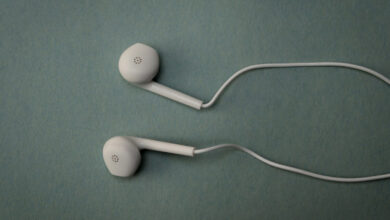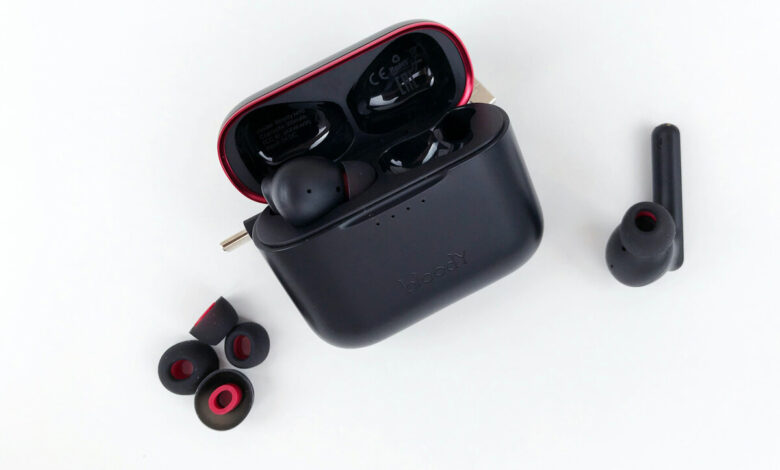
The right ear tip size is the smallest of the sizes in your box that still forms a full seal in your ear canal, confirmed by four checks in order: a seal check, a talk check, a motion check, and a twenty-minute comfort check. If you have already worked through fit and nothing in the box seals at all no matter how you angle it, the problem probably is not sizing at all. Read why your earbuds might not fit first, then come back here once you have narrowed it down to picking between the sizes you own.
This guide is a decision framework, not a lab report. It is built from published manufacturer fit guidance (the kind of instructions that ship with in-ear headphones and the fit-test tools built into apps like AirPods settings), organized into a sequence you can run in a few minutes with the tips already in the box. Nothing here requires buying anything new.
Start here: is the problem the size, or the shape of the bud?
Before you run any check, separate two different problems that get lumped together. Sizing is about how far a tip presses into your ear canal and how much of the canal it fills. Shape is about the angle the earbud housing sits at, how heavy it is, and whether the nozzle points where your canal actually runs. A tip that is the correct size can still fall out of an earbud that sits at the wrong angle for your ear.
Most in-ear headphones ship with three tip sizes because ear canal diameter varies enough across an adult population that a single size will not seal for everyone. That is also why a printed size chart on the box is a starting point rather than an answer: canal shape as much as canal diameter changes how a tip actually seats, which is why the checks below matter more than reading a label.
If wearing any size, in any position, in either ear, has ever produced real pain (not just pressure, but soreness that lingers after you take the buds out), stop and read what to do when earbuds hurt your ears before you keep testing sizes. Pain is a signal to change approach, not to keep cycling through tips.
If pain is not the issue and you just cannot tell which of the three sizes in the box is "right," the four checks below are built for exactly that.
The seal check: what correct bass actually sounds like
Start with a track you know well, something with a steady bass line rather than a quiet acoustic recording, because bass response is the most sensitive indicator of seal quality. Insert one tip size, seat the earbud, and play the track at a normal listening level.
A correct seal sounds full: the bass is present and close, and the mids and highs sound balanced rather than thin. A seal that is too loose (tip too small, or seated shallow) sounds distant and light, like the bass has been turned down even though you have not touched the volume. If a failed seal is the actual root cause, the symptom you are hearing has its own name: read why earbuds sound muffled or thin if this section describes what you are experiencing right now, since a "too small" seal and a "too muffled" seal are often the same underlying problem described from two directions.
Swap to the next size up and repeat with the same track at the same volume. Note which sizes produce that full, present bass and which ones sound hollow or distant. You are not choosing yet, just building a shortlist of sizes that pass the seal check at all.
The talk check: your own voice tells you more than the music
Stop the music. With the earbuds still in and seated, say a few sentences out loud in your normal speaking voice, the way you would if someone walked into the room.
If the seal is right, your own voice sounds slightly different from normal, a bit closer or fuller, because bone-conducted sound is being trapped rather than escaping around a loose tip. If your voice sounds completely normal, as if you were not wearing anything, the seal is loose and that size is too small or seated too shallow. If your voice sounds boomy, pressurized, or like you are talking inside a barrel, the tip is likely too large or pushed in too far.
This check catches a category of false pass that the seal check alone misses: a tip that sounds fine on bass-heavy music because it is jammed in tight, not because it is actually sized correctly. Run the talk check on every size that passed the seal check before moving on.
The motion check: chew, turn, walk
A seal that holds while you are sitting still is not the same thing as a seal that holds during a normal day. With each remaining candidate size in place and music playing, do three things in sequence: chew (or open and close your jaw as if chewing gum), turn your head fully left and right, and walk a few steps.
Listen for the bass to drop out or flicker during any of these movements. A tip that loses its seal when your jaw moves is too small for the shape of your canal, even if it passed the first two checks sitting still. This is also where you will notice if the earbud itself works loose from the housing shape rather than the tip, which is a fit issue rather than a sizing issue, and points back to the shape question raised at the start of this guide.
Any size that survives chewing, turning, and walking without the bass thinning out moves on to the last check.
The twenty-minute check: the one that catches a tip that is slightly too big
This is the check every fit guide on this topic skips, and it is the one that actually separates "passes in the store" from "comfortable for a commute." A slightly oversized tip can pass the seal check, the talk check, and even the motion check, and still become uncomfortable only after sustained wear, because the pressure it puts on the canal wall builds gradually rather than announcing itself immediately.
For each size still on your shortlist, wear it continuously for about twenty minutes doing something normal (working, walking, sitting at a desk), not actively testing it. At the end of that period, ask one question: does this ear still feel neutral, or does it feel like something is in it? A correctly sized tip tends to fade from awareness within the first few minutes. A tip that is a size too large tends to announce itself more, not less, as the twenty minutes go on, as mild pressure builds into a dull ache or an urge to remove it.
Any size that still feels neutral at the twenty-minute mark is a genuine fit, not just a seal that measured well in a thirty-second test.
Quick reference: the four checks
| Check | What it actually tests | Sign of a fail |
|---|---|---|
| Seal | Bass presence and overall balance on a familiar track | Sound is thin, distant, or the bass is weak |
| Talk | Whether your own speaking voice sounds trapped in a normal way | Voice sounds completely unchanged (too loose) or boomy (too tight) |
| Motion | Whether the seal holds while chewing, turning your head, and walking | Bass flickers or drops out during movement |
| Twenty-minute | Whether the fit stays neutral over sustained, ordinary wear | Mild pressure builds into a dull ache before time is up |
Run the four checks in order. A size only earns a place on your shortlist after it passes the one before it, so a tip that fails the seal check does not need a twenty-minute trial at all.
If two sizes both pass, take the smaller one
Most guides to this topic stop at "find a size that seals." That leaves a gap when two adjacent sizes both pass every check above, which happens more often than you would expect, since canal diameter does not always land cleanly on one of three or four manufacturer sizes.
The stopping rule: when two sizes both pass the seal, talk, motion, and twenty-minute checks, take the smaller one. A slightly smaller tip that holds its seal is more comfortable over hours, easier to reseat correctly if it shifts, and less likely to build the gradual pressure that the twenty-minute check is designed to catch. A slightly larger tip that also passes today is more likely to become the one you are digging out of a drawer in a month because it started bothering you. Seal quality in the first minute is necessary but not sufficient; comfort over hours is the tiebreaker, and comfort favors the smaller tip that still works.
Once size is settled, the next variable worth adjusting is material rather than diameter. Foam and silicone tips of the same nominal size can feel and seal differently in the same ear, and that comparison is covered separately in foam vs. silicone ear tips.
Your two ears may need different sizes
One detail almost never stated plainly: it is normal, not a defect, for your left and right ear canals to be different sizes. Ear canal dimensions are not symmetrical for a meaningful share of people, and manufacturer fit-test tools account for this directly. Apple's own guidance for its Ear Tip Fit Test, for example, explicitly tells users they may need a different tip size in each ear to get a good result on both sides, which is a useful, brand-neutral illustration that this kind of built-in fit-check tool exists and treats mismatched sizing as a normal outcome rather than an error.
Run the full four-check sequence on each ear independently rather than assuming whatever size passes on one side will pass on the other. If your left ear settles on a medium tip and your right ear settles on a small one, that is a correct result, not a sign that one ear is somehow abnormal or that the earbuds are defective. Mixing sizes left and right is also worth rechecking any time you swap to a different pair of earbuds, since tip sizing is specific to a given nozzle diameter and does not automatically carry over between models.
Related reading
- If nothing in the box has ever sealed, the root cause may be fit rather than size: why your earbuds might not fit
- For the full map of earbud and headphone comfort, sound, and connection problems, start at the headphone and earbud problem map
- Once size is settled, compare tip material: foam vs. silicone ear tips
- If the wrong size has already caused soreness: what to do when earbuds hurt your ears
- If your sound is distant or thin rather than painful, that symptom is covered on its own: why earbuds sound muffled
FAQ
None of the tips in my box ever seal, no matter which size I try. What's wrong?
That points to a fit problem rather than a sizing problem: the earbud housing angle or your ear canal shape, not the tip diameter. Read why your earbuds might not fit for that separate diagnosis before trying more sizes.
Is it normal to need a different ear tip size in each ear?
Yes. Ear canals are frequently different sizes on each side of the head, and manufacturer fit-test tools, including Apple's Ear Tip Fit Test, are built to expect and report this. Test and choose each ear independently rather than assuming they match.
Does a bigger ear tip give better noise isolation?
Not automatically. Isolation comes from a complete seal, not from tip volume. A tip that is too large can break the seal by pushing the earbud out of its natural resting angle, which lowers isolation compared to a correctly sized tip that seats fully and sits where the housing was designed to rest.
How do I tell if a tip is too small versus too large?
Too small typically sounds thin and distant on the seal check and works loose during the motion check. Too large typically passes the seal and talk checks but creates a boomy voice sound and builds discomfort during the twenty-minute check even though it seemed fine at first.
Should I pick the size that feels tightest, since that seems the most secure?
No. Tightness is not the same as correct seal, and a tip jammed in for tightness usually fails the twenty-minute comfort check even when it passes everything else. Follow the four checks in order rather than judging by feel alone.