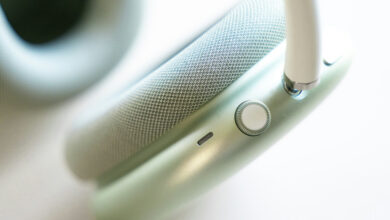
Over-ear pads circle the whole ear and rest their weight on the skull; on-ear pads are smaller and press directly on the ear itself. That is the one physical difference, and it explains almost everything else that follows: over-ear tends to be more comfortable across long sessions and blocks more outside noise, at the cost of trapping heat; on-ear runs cooler and folds smaller, at the cost of pressing harder on a small patch of ear. This is not the same question as open-back vs. closed-back headphones, which is about what the back of the cup does with sound, not where the pad sits on your head. A headphone is one of each, so you are actually choosing on two separate axes at once, not one.
This article builds its comparison from published manufacturer specifications and the acoustic and ergonomic principles that headphone makers themselves state in their design documentation, not from a hands-on test of specific pairs. No model here is recommended by name, and none of the specific numbers you'll see on manufacturer spec sheets (clamping force in grams, isolation in decibels) are repeated here unless attached to a named product's own published figure, because those numbers vary by model and by head shape, and a borrowed number is worse than no number.
Not the same question as open-back vs. closed-back
It is easy to read "over-ear vs on-ear" and "open-back vs closed-back" as two versions of the same buying guide. They are not, and conflating them is the most common way people end up with the wrong headphones.
Open vs. closed describes what happens at the back of the ear cup: an open-back cup lets air and sound pass through a vented or perforated housing, which produces a wider, more natural soundstage but leaks audio out and lets ambient noise in. A closed-back cup seals that same space, which improves isolation and bass but can sound comparatively boxed in. That axis is covered in full in our open-back vs. closed-back headphones guide.
Over vs. on describes something else entirely: where the pad makes contact with your head. It has nothing to do with what's happening acoustically behind the driver. In practice this means you can buy an open-back, over-ear headphone; a closed-back, over-ear headphone; and a closed-back, on-ear headphone (on-ear designs are almost always closed, since there is no cup depth to vent). Every full-size headphone on the market sits somewhere on both axes at once. If a comparison page only talks about one axis, it is only answering half of your question.
Comfort over three hours: distributed vs. concentrated pressure
Strip away the marketing language and the comfort argument between over-ear and on-ear comes down to one variable: where the clamping force of the headband ends up.
A headband has to hold the ear cups against your head with enough force to keep the seal (and the headphones) in place. Over-ear pads are large enough to fully surround the ear, so that clamping force spreads across a ring of skin and tissue on the skull, around the ear rather than on it. Cartilage, the firm structural tissue that gives your outer ear its shape, is largely left alone.
On-ear pads are smaller by design; they rest on top of the ear rather than around it, which means the same clamping force lands on a much smaller area, and that area is mostly ear cartilage. Cartilage does not have the same give as the skin and muscle around it, so pressure that would be barely noticeable spread over a wider area becomes a distinct point of discomfort when concentrated onto it. This is the same mechanism behind the pain some earbud wearers report, where a smaller contact point (in that case the ear canal wall) takes force it was not built to carry; we cover that specific case, and the in-ear alternative, in why earbuds hurt my ears.
None of this means on-ear headphones are unwearable. A well-designed on-ear pair with generous, soft padding and a headband that distributes weight evenly can be worn comfortably by plenty of people, especially for shorter sessions. It means the failure mode is different: over-ear headphones tend to fail on heat and weight after enough hours, while on-ear headphones tend to fail on localized ear pressure, often sooner, and often specific to head shape and clamping force in ways that vary from one person to the next.
Heat, and why it decides more than people expect
Most comparison pages mention heat in a single sentence, usually right after conceding that over-ear headphones are the more comfortable choice, and then move on. That ordering undersells the problem.
An over-ear pad forms a small sealed pocket of air around your entire ear. That pocket does not ventilate, so body heat builds up inside it the same way it would under any sealed cushion held against skin. In a cool room for a short session, this is barely noticeable. Worn for a full workday, during exercise, or in a warm or humid climate, it becomes the dominant sensation, often before clamping fatigue or cartilage pressure ever become a factor. Ears sweat under a full seal the same way any covered skin does, and once sweat is involved, both comfort and pad longevity suffer.
On-ear pads make smaller, more open contact with the ear, so air keeps moving around and past them instead of getting trapped. That airflow is the direct trade for the higher-pressure contact patch described above. It is a genuine, first-order benefit, not a footnote.
The practical takeaway is that heat should be weighed against your actual use case, not treated as a minor caveat to an otherwise settled recommendation. Someone using headphones at a desk in air conditioning for an hour a day is unlikely to notice it. Someone wearing full-size headphones for an eight-hour shift, commuting outdoors in summer, or working out is choosing heat as a real, ongoing cost of the extra isolation and comfort that over-ear provides, and for that reader, heat can be the deciding factor over everything else on this page.
Isolation and what it does for noise canceling
The same full seal that traps heat is also what makes over-ear headphones the stronger isolators. A cup that fully encloses the ear creates a physical barrier against outside sound before any electronics get involved, in the same way a sealed window blocks more street noise than a cracked one. On-ear pads, resting on top of the ear rather than around it, leave small gaps at the edges that let ambient sound leak in regardless of how good the padding material is.
This matters beyond raw quiet. Active noise canceling works by generating a matching inverse sound wave to cancel unwanted noise, and it performs best when it only has to handle low, steady frequencies (engine drone, HVAC hum) because the physical seal has already blocked the higher-frequency noise on its own. An over-ear cup gives ANC circuitry less work to do and a more predictable acoustic space to do it in, which is a meaningful part of why over-ear ANC headphones tend to outperform on-ear ANC headphones at the same tier, even when the electronics inside are comparable. On-ear headphones can still include ANC, but they are asking the processing to compensate for a seal that was never fully there. For a deeper look at what ANC does and does not solve, and how it differs from passive isolation, see our guide to ANC vs. noise isolation.
The honest case for on-ear
Most manufacturer comparison pages land on over-ear and treat on-ear as the compromise pick, the thing you settle for when you need something smaller. That is not the full picture. On-ear headphones are not simply "worse over-ear"; they carry a different set of costs, and for some readers those costs are the right ones to pay.
Glasses wearers. A full over-ear cup has to seal directly over a glasses arm, which breaks the seal at exactly that point and creates a pressure spot along the frame for as long as the headphones are worn. On-ear pads make less total contact around the ear, which can reduce (though not eliminate) that specific conflict. This trade-off genuinely cuts both ways depending on frame thickness and head shape, so rather than resolve it here, we cover it in full in headphones with glasses.
Hot environments and long shifts. As covered above, on-ear runs cooler for the same reason it isolates less: less sealed surface area against the skin.
People who need to hear the room. Retail and hospitality staff, cyclists and runners on shared paths, parents keeping half an ear on a child, anyone monitoring an environment rather than escaping it, benefit from a form factor that does not fully block ambient sound by default.
Anyone taking headphones on and off constantly. On-ear headphones are lighter and smaller, which matters if you are removing them for conversations dozens of times a day. The lower clamping mass also tends to mean less hair disruption and less "headphone ear" after a quick session, compared to a heavier over-ear cup.
None of these points overturn the physics: on the raw comfort-over-many-hours and isolation questions, over-ear wins on principle, which is also why the manufacturer pages that dominate this search term land there. The point is that "wins on principle" is not the same as "wins for you," and the reasons it might not are specific and predictable rather than vague.
Which one you should be looking at
| Factor | Over-ear | On-ear |
|---|---|---|
| Where pressure lands | Spread around the ear, on the skull | Concentrated on the ear cartilage itself |
| Comfort over long sessions | Generally better, once heat is controlled | Can fatigue sooner on tight-clamping pairs |
| Heat buildup | Higher; full seal traps warmth | Lower; more airflow around the ear |
| Passive isolation | Stronger, from the full seal alone | Weaker; gaps at the pad edges leak sound |
| How well ANC performs on top | Better; seal reduces the noise ANC has to cancel | Works, but compensating for a weaker seal |
| Fit with glasses | Seal breaks directly on the frame arm | Less total contact, can reduce the conflict |
| Portability and weight | Bulkier, heavier, folds larger | Lighter, smaller, easier on and off |
Use the physical trade-off as the filter, not a features list. If you are mostly indoors, in a climate-controlled space, for sessions long enough that isolation and steady comfort matter more than portability, the pressure-distribution and seal advantages of over-ear headphones are real and well documented, which is exactly why they show up as the default recommendation across the review sites. If you wear glasses often, work somewhere warm, need situational awareness, or are putting headphones on and off all day rather than wearing them continuously, the case for on-ear is not a downgrade, it is a better match for a different set of conditions. Either way, the decision is really about which cost you would rather carry, concentrated pressure or trapped heat, because on the physics, that is the actual choice being made.
For the wider set of headphone and earbud comfort, fit, and troubleshooting questions this one connects to, start at our headphone and earbud problem map.
FAQ
Is over-ear or on-ear better for long workdays?
Over-ear is generally the more comfortable option for continuous multi-hour wear, because it spreads clamping pressure across the skull instead of concentrating it on the ear cartilage. The trade-off is heat buildup, which becomes the limiting factor before pressure does for most people, especially in a warm office or without air conditioning.
Do on-ear headphones hurt your ears?
They can, because the pad rests on the cartilage of the outer ear rather than around it, concentrating the headband's clamping force onto a small, firm area. A looser fit, softer padding, and shorter sessions all reduce this; taking breaks helps more than any single design choice.
Is over-ear vs on-ear the same question as open-back vs closed-back?
No. Over-ear vs on-ear is about where the pad contacts your head. Open-back vs closed-back is about whether the back of the ear cup is vented or sealed, which affects soundstage and how much sound leaks out, not comfort or clamping pressure. A headphone is one of each independently.
Are on-ear headphones good for glasses wearers?
Often, though not always. On-ear pads make less total contact around the ear than a full over-ear cup, which can reduce the pressure point where a glasses arm crosses the seal, but frame thickness and headband tension both affect the outcome. See our full breakdown in headphones with glasses before assuming either form factor solves it outright.
Why do over-ear headphones get hot?
The pad forms a sealed pocket of air fully enclosing the ear, and that seal is also what gives over-ear headphones their isolation advantage. Sealed skin traps body heat the same way any covered surface does, so the better the isolation, the more heat tends to build up during extended wear.
Related reading
- Open-back vs. closed-back headphones: the other axis of full-size headphone design, decided by what happens at the back of the cup
- Headphone and earbud problem map: the full cluster of comfort, fit, and troubleshooting guides this article belongs to
- Why earbuds hurt my ears: the same concentrated-pressure mechanism, applied to in-ear designs, and when in-ear is the better fit
- ANC vs. noise isolation: what active noise canceling actually does on top of a physical seal
- Headphones with glasses: the frame-and-seal conflict in full, and how it differs by form factor